
The recent US military strikes on southern Iran have damaged civilian water infrastructure, affecting thousands of residents in an area already facing extreme heat, and added a new layer to the volatile US-Iran confrontation. The incident underscores the risks of escalation in a strategically vital region where military targets often sit near civilian facilities.
Background of US-Iran Tensions
US-Iran relations have remained adversarial for decades, marked by disputes over Iran’s nuclear program, regional proxies, and freedom of navigation in the Strait of Hormuz, through which a significant portion of global oil trade passes. Periodic military incidents have punctuated periods of diplomatic stalemate, with both sides accusing the other of provocation. The current episode fits into this pattern of tit-for-tat actions, though the direct targeting of infrastructure supporting civilian populations introduces immediate humanitarian dimensions.
Strikes and Immediate Impact
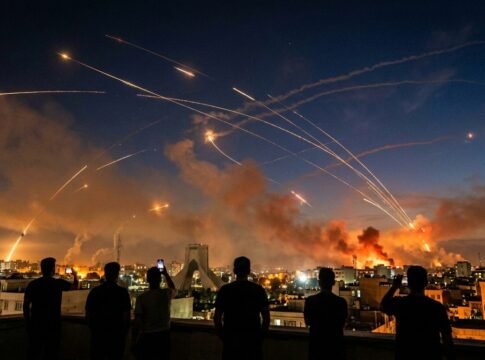
According to US Central Command (CENTCOM), American forces conducted strikes overnight on June 10, 2026, targeting locations in the cities of Jask and Sirik, as well as Qeshm Island in the Strait of Hormuz. CENTCOM described the operation as a “proportional response” and “self-defense” measure following Iran’s downing of a US Army Apache helicopter. The US military stated that the strikes focused on communications and radar facilities.
Iranian officials reported that the strikes also destroyed two concrete water storage reservoirs in the Bamani district of Sirik County, Hormozgan Province. The reservoirs, with capacities of approximately 500 cubic metres and 2,000 cubic metres, supplied drinking water to the city of Kouhestak and approximately ten surrounding villages. Abdolhamid Hamzehpour, CEO of the Hormozgan Province Water and Wastewater Company, confirmed the destruction of the reservoirs and associated mechanical infrastructure, leading to the suspension of water distribution in the affected areas.
Iranian state television reported that the damage created a major problem for the region’s water supply network, noting insufficient groundwater resources as an immediate alternative. An estimated 20,000 residents lost access to safe drinking water amid temperatures ranging between 45 and 50 degrees Celsius (113 to 122 degrees Fahrenheit).
Iranian Foreign Minister Abbas Araghchi stated that Iranian forces “will leave no attack or threat unanswered,” signaling potential for further retaliation. Both US and Iranian accounts acknowledge that military and civilian infrastructure can exist in proximity, though interpretations of the strikes’ intent and precision differ.
The United States has framed its actions as necessary self-defense against what it calls “unjustified Iranian aggression.” CENTCOM’s statements emphasized the targeted nature of the operation against military assets. Western governments have generally echoed concerns about Iranian actions in the region, though specific responses to the water infrastructure damage were limited in initial reporting from outlets such as Reuters and the BBC.
Iran has highlighted the civilian toll, presenting the strikes as evidence of disproportionate force. Officials in Tehran have used the incident to rally domestic support and criticize US policy. The divergence in narratives—US focus on military targets versus Iranian emphasis on humanitarian consequences—is consistent with longstanding patterns in such exchanges, where each side seeks to shape international perception.
Multilateral institutions, including the United Nations, have not yet issued detailed verified assessments of the on-ground humanitarian situation as of June 11, 2026. Broader ripple effects mentioned in regional reporting, such as potential impacts on food security noted by World Food Programme officials in the context of ongoing Middle East tensions, remain under monitoring.
The incident illustrates the challenges of operating in dual-use environments where military and civilian assets are closely intertwined. Precision strikes, while aimed at degrading capabilities, carry risks of collateral effects, particularly in arid regions with limited water redundancy. Iran’s water management infrastructure in Hormozgan Province, already strained by geography and climate, faces acute pressure from the loss of these reservoirs.
Neither side’s institutional statements suggest an immediate off-ramp. US military posture in the Gulf remains robust, backed by alliances and forward-deployed assets. Iran’s response options include asymmetric measures through regional partners or direct actions, though operational constraints and international scrutiny limit escalation pathways. The event highlights the gap between rhetorical commitments to “proportionality” or “decisive response” and the practical difficulties of containing fallout in a densely interconnected region.
Diplomatic channels, including potential backdoor communications or involvement by third parties such as Oman or Qatar, which have historically played mediating roles, have not produced public breakthroughs. The G20 and other forums have not issued coordinated statements specific to this strike at the time of reporting.
The destruction of water reservoirs in extreme heat adds urgency to humanitarian considerations that could influence diplomatic calculations. International actors may push for rapid assessment and mitigation efforts, potentially through UN mechanisms or bilateral aid, though political divisions complicate such responses.
The episode risks further hardening positions ahead of any future negotiations on broader issues like nuclear constraints or regional security. Both Washington and Tehran have demonstrated willingness to absorb costs for perceived strategic gains, yet the civilian dimension introduces variables that could affect third-party involvement or domestic support levels over time.
As the situation evolves, the interplay between military necessity and humanitarian impact will likely shape how the international community assesses responsibility and proportionality. Verified, on-the-ground evaluations from neutral observers will be critical for separating facts from competing claims in the coming days and weeks.