New Delhi: A storm of protest has erupted over the results of the Foreign Medical Graduate Examination (FMGE) conducted in June 2026, with thousands of aspiring doctors alleging gross unfairness in the exam’s difficulty level, the surprise introduction of video-based questions, and abysmal conditions at test centres.
The National Board of Examinations in Medical Sciences (NBEMS) declared the results on July 7, revealing that only 4,635 of the 37,448 candidates who appeared for the mandatory licensing test qualified, a pass percentage of just 12.38 per cent, the lowest in the last six sessions.
The outcome means that nearly 88 per cent of aspirants failed, sparking widespread anguish and demands for intervention.
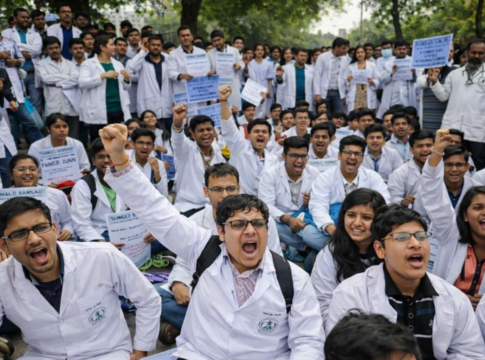
Candidates and student organisations have raised a litany of grievances, arguing that the exam was disproportionately difficult and deviated from its stated objective of assessing minimum competency.
Many candidates who appeared for the June 28 examination asserted that the question paper was “unfairly difficult” and “exhausting,” with its conceptual and analytical demands comparable to those of postgraduate entrance tests like NEET PG and INI-CET.
The primary complaint centres on lengthy, clinically complex questions and the unannounced introduction of video-based Multiple Choice Questions (MCQs). Candidates who had prepared based on the Information Bulletin were taken by surprise, saying the videos wasted valuable time.
“Candidates had only about 60 seconds per question on average. Videos lasting around 40 seconds left almost no time to analyse and answer,” a candidate from the All FMGs Association (AFA) explained, echoing widespread concern. Several videos lasted up to 40 seconds, forcing candidates to spend most of their allotted time watching rather than answering.
The Federation of All India Medical Association (FAIMA) also highlighted that many questions were presented through video and GIF-based scenarios, a format rarely encountered in previous sessions, requiring candidates to observe symptoms and make a diagnosis on the spot.
Beyond the question paper, candidates have complained of “extremely poor” facilities at exam centres, which they claim made a difficult situation unbearable. Reports from centres, including one in Noida, described halls with non-functional air conditioning, poor ventilation, and a lack of drinking water.
“Candidates were forced to attempt a high-stakes examination in excessive heat, feeling dizzy and exhausted,” one representative said, adding that the physical discomfort severely hampered concentration. Despite paying a fee of approximately Rs 7,000, many questioned why basic amenities were not provided.
The controversy has also reopened demands for greater transparency in the evaluation process. The NBEMS does not release the official answer key or allow re-evaluation, leaving candidates with no recourse to verify their scores.
Students have taken to social media platforms to express their frustration, demanding that the NBEMS release the answer key and conduct a thorough review of the evaluation process.
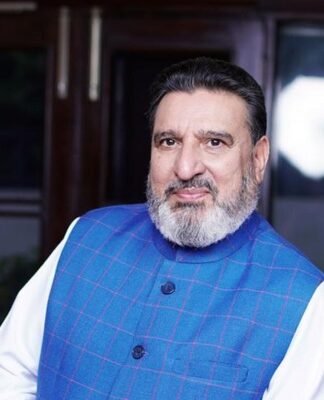
The matter has escalated politically, with Aga Syed Ruhullah Mehdi, Member of Parliament from Srinagar, writing to the NBEMS seeking “careful, merit-based consideration” to ensure fairness and preserve the credibility of the exam. He cited concerns over the paper’s length, complexity, and the impact of the time-intensive video questions.
Student bodies, including the Tamil Nadu Medical Students Association-Foreign Medical Graduates (TNMSA FMG) wing and the All FMGs Association (AFA), have submitted formal representations demanding a comprehensive review and a one-time reduction in the qualifying criteria.
“We demand grace marks for the unannounced video-based MCQs and a reduction of the qualifying mark to 35 per cent for this session,” said a representative of the AFA, adding that candidates who scored 149, just one mark short of the 150 required to pass, should be given special consideration.
A breakdown of the results reveals the scale of the failure. Out of 36,280 candidates who appeared, 31,645 did not qualify. As many as 327 candidates missed qualification by a single mark (scoring 149), while 1,022 scored between 147 and 149, and 4,157 fell in the 140-149 range.
The pass percentage has declined sharply from 23.93 per cent in December 2025 to 18.61 per cent in June 2025.
In its official notification, the NBEMS stated that every question was reviewed by faculty members for technical correctness and that marks were awarded for technically incorrect questions or for those with two correct answers. However, the board has not issued a detailed clarification on the other allegations.