

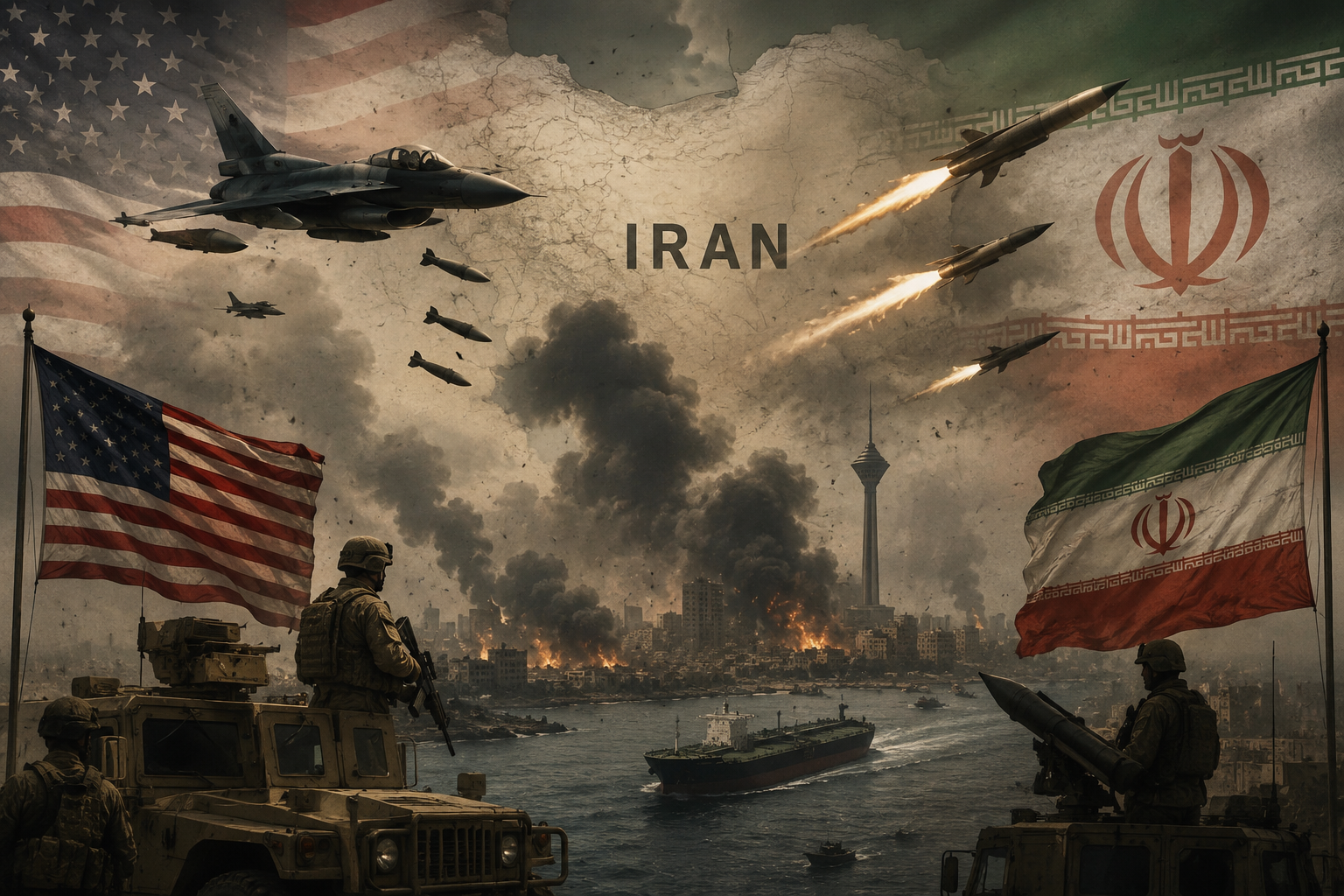
Three months into a conflict that President Donald J. Trump once promised would be decisive, the war with Iran has settled into an uneasy stalemate marked by mutual exhaustion and strategic uncertainty. Diplomatic talks continue in fits and starts. Oil still moves through the Strait of Hormuz, but under conditions that Tehran appears determined to shape. Proxy clashes persist in Lebanon despite repeated cease-fire announcements. At home, a narrowly divided Congress has issued a symbolic rebuke to the administration, while public frustration grows over a war that has yet to produce the swift strategic gains its supporters once predicted.
The latest round of negotiations, conducted through intermediaries and occasional direct contacts, appears to be losing momentum. Iranian officials, including Mohsen Rezaei, an adviser to Supreme Leader Mojtaba Khamenei, have pointed to what they describe as unresolved ambiguities in a draft memorandum of understanding. Tehran accuses Washington of demanding firm commitments from Iran while leaving key Iranian concerns insufficiently addressed.
In Washington, questions are also mounting. Critics both inside and outside the administration have challenged the rationale for continuing negotiations. If U.S. and Israeli strikes truly “obliterated” Iran’s nuclear program, as President Trump has repeatedly claimed, they ask, why is a formal agreement still necessary?
For now, neither side appears willing to make the concessions needed for a breakthrough, nor eager to risk a return to open escalation. Instead, both seem content to preserve a fragile truce. The reasons are as much political as they are military.
Recent polling reflects growing public skepticism. According to the latest University of Maryland Critical Issues Poll conducted by Ipsos between May 15 and May 21 among 1,377 American adults, a majority of respondents believe the war has done more harm to U.S. interests than good. The survey also found that a plurality of Americans believe neither Washington nor Tehran is winning the conflict — a striking departure from the “rally-around-the-flag” effect that has often accompanied major U.S. military interventions.
The skepticism cuts across ideological lines. Critics on the left describe the conflict as an unnecessary war that has drawn the United States into another costly Middle Eastern entanglement. On the right, concerns focus on whether the campaign has actually neutralized the Iranian threat or merely dispersed it while consuming resources and political capital.
That growing unease was reflected in Wednesday’s House vote, when lawmakers approved a 215-208 measure calling for the withdrawal of American troops. Four Republicans joined Democrats in backing the resolution, delivering what House Foreign Affairs Committee Democrats described as “a loud and unambiguous message” to the president. While the measure is largely symbolic and unlikely to survive a veto, it marked the first significant effort by the Republican-controlled House to place limits on Trump’s military operations against Iran since the conflict began.
Control of the Strait
At the center of the standoff remains the Strait of Hormuz, the narrow waterway through which roughly one-fifth of the world’s oil trade passes. Iranian forces continue to exert considerable influence over maritime traffic. According to shipping intelligence data cited by Lloyd’s List and reported by The Hindu, vessels with an “Iran nexus” accounted for nearly 97 percent of crossings in mid-March, underscoring Tehran’s ability to shape access to the waterway even amid active hostilities.
In recent weeks, more non-Iranian-linked vessels have resumed transits through the strait. Iranian state-linked media and officials from the Islamic Revolutionary Guard Corps have claimed that dozens of vessels crossed with Iranian permission, a claim that, while difficult to independently verify, highlights Tehran’s effort to portray itself as the gatekeeper of maritime security in the Gulf.
This calibrated approach reflects Iran’s broader strategy: avoiding a complete closure of the strait that could trigger overwhelming retaliation while demonstrating that any lasting settlement must address its core security and economic concerns.
The fragility of the situation was highlighted by an explosion near Oman’s Mina al-Fahal oil terminal that disrupted crude-loading operations. Regional media reports linked the incident to a suspected drone attack, although responsibility has not been conclusively established. Regardless of attribution, such incidents increase insurance costs, unsettle shipping markets and reinforce the economic burden created by the conflict.
Lebanon’s Unraveling Cease-Fire
The conflict’s effects continue to reverberate across the region, particularly in Lebanon, where successive cease-fire efforts have struggled to hold. Despite a U.S.-brokered framework announced in Washington, Israeli strikes have continued. According to figures released by Lebanon’s Ministry of Public Health and reported by multiple international outlets, the death toll from Israeli attacks since March has surpassed 3,500.
Hezbollah leader Naim Qassem has dismissed the limited truce as a “farce,” insisting on a comprehensive cease-fire and a full Israeli withdrawal while warning that northern Israel remains a legitimate target.
His position is significant. Analysts in Beirut note that Hezbollah remains the dominant actor on the Lebanese side of the conflict, often eclipsing the authority of the Lebanese state. Its rejection of the arrangement highlights the limits of U.S. diplomacy in managing conflicts that have become deeply interconnected.
Meanwhile, Israeli operations have increasingly relied on an extensive regional intelligence network. According to a CNN investigation citing multiple sources, Israel secretly deployed elite military and intelligence personnel to southern Azerbaijan — less than 60 miles from the Iranian city of Tabriz — as well as locations in Iraq, the United Arab Emirates and Somaliland. CNN reported that what began as contingency rescue teams evolved into platforms for intelligence collection and drone operations, expanding Israel’s reach while drawing neighboring states further into the conflict.
These dynamics complicate any path toward de-escalation. Iran views concessions on its nuclear program or regional proxy network as potentially existential, particularly while Israeli assets remain positioned along its periphery. The Trump administration, meanwhile, faces growing pressure to convert military pressure into a diplomatic outcome without appearing to reward Tehran.
Domestic Headwinds and Strategic Reckoning
Public opinion helps explain why the administration may prefer maintaining the current situation over either major escalation or a rapid withdrawal.
The University of Maryland-Ipsos survey found broad skepticism about whether the conflict has advanced U.S. interests. Respondents frequently pointed to higher energy prices, strained alliances and continuing regional instability while identifying few clear strategic gains.
Unlike the early stages of the wars in Afghanistan or Iraq, this conflict has failed to generate a lasting national consensus. Public fatigue emerged quickly and has only deepened as the conflict drags on.
President Trump has continued to project confidence, arguing that the United States could access Iran’s “entombed” enriched uranium without a formal agreement and expressing openness to meeting Khamenei under favorable conditions. Yet the gap between administration rhetoric and battlefield realities is becoming harder to ignore. If core military objectives have already been achieved, critics ask, why do negotiations remain essential? Each additional week of deadlock makes that question more difficult to answer.