
The idea of grassroots democracy lies at the heart of India’s governance framework, reflecting the belief that true development must originate from the participation of people at the local level. In Jammu & Kashmir, this principle has acquired renewed significance in recent years, as Panchayati Raj institutions have emerged as vital instruments for decentralized governance, participatory decision-making, and inclusive development. In a region long shaped by political complexities, security challenges, and uneven development, the strengthening of Panchayati Raj has opened new pathways for empowering local communities and ensuring that governance is not distant but directly responsive to the needs of the people.
The evolution of Panchayati Raj in Jammu & Kashmir has been a gradual yet transformative process. Historically, local governance structures in the region existed but lacked the institutional strength, autonomy, and continuity required to function effectively. Over time, efforts to align the region’s governance framework with the broader national model have led to the revitalization of Panchayati Raj institutions. Elections to Panchayats and Block Development Councils have brought representatives closer to the people, enabling a more direct channel for addressing local issues and aspirations.
At its core, Panchayati Raj represents the democratization of governance. It ensures that decision-making authority is not confined to higher administrative levels but is shared with local representatives who are intimately familiar with the challenges and opportunities within their communities. In Jammu & Kashmir, this has had a profound impact, particularly in rural and remote areas where access to centralized administration is often limited. Panchayat representatives serve as the first point of contact for citizens seeking solutions to everyday problems, ranging from infrastructure needs to welfare benefits.
One of the most significant contributions of Panchayati Raj institutions in the region has been in the area of development planning and implementation. Local bodies are actively involved in identifying priorities, allocating resources, and monitoring the execution of projects. This localized approach ensures that development initiatives are tailored to the specific needs of each area rather than being driven by a one-size-fits-all model. Whether it is the construction of roads, the provision of drinking water, or the development of community facilities, Panchayats play a central role in translating policy into tangible outcomes.
The impact of this decentralized approach is particularly visible in border districts such as Poonch and Rajouri, as well as in the hilly terrains of Doda, Kishtwar, and Reasi. These regions, which have historically faced challenges related to connectivity, infrastructure, and service delivery, are now witnessing more targeted and responsive development interventions. Panchayat representatives, being part of the community, possess a nuanced understanding of local conditions and are better positioned to address issues such as seasonal accessibility, resource constraints, and socio-cultural dynamics.
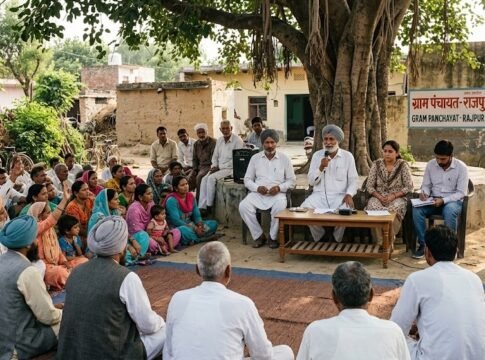
Another critical dimension of Panchayati Raj in Jammu & Kashmir is its role in enhancing transparency and accountability. By bringing governance closer to the people, it creates opportunities for greater public scrutiny and participation. Gram Sabhas, or village assemblies, provide a platform for citizens to voice their concerns, review development works, and hold their representatives accountable. This participatory mechanism not only strengthens democratic practices but also fosters a sense of ownership among the people, encouraging them to actively engage in the development process.
The empowerment of women through Panchayati Raj institutions is a noteworthy development in the region. The reservation of seats for women has enabled their increased participation in local governance, challenging traditional norms and creating new avenues for leadership. Women representatives have played a crucial role in addressing issues related to health, education, sanitation, and social welfare, often bringing a more inclusive and community-oriented perspective to governance. Their involvement has not only improved the effectiveness of local institutions but has also contributed to broader social change by promoting gender equality and empowerment.
Panchayati Raj institutions have also become important conduits for the implementation of welfare schemes. Acting as intermediaries between the government and the people, they facilitate the identification of beneficiaries, the dissemination of information, and the monitoring of program delivery. This has significantly improved the reach and effectiveness of various initiatives aimed at poverty alleviation, employment generation, housing, and social security. In many cases, the presence of an active Panchayat has ensured that benefits reach those who need them most, reducing delays and minimizing leakages.
In the context of Jammu & Kashmir, the role of Panchayati Raj extends beyond development and governance; it is also closely linked to the process of building trust and stability. Decentralized institutions provide a platform for dialogue and engagement, enabling communities to address grievances and resolve conflicts at the local level. This is particularly important in areas that have experienced prolonged periods of unrest, where rebuilding trust between the people and the state is essential for lasting peace. By fostering inclusive participation and responsive governance, Panchayati Raj contributes to creating an environment where citizens feel heard and valued.
The integration of technology into Panchayati Raj functioning has further enhanced its effectiveness. Digital platforms are increasingly being used for planning, monitoring, and reporting development activities. Online systems for fund allocation and utilization have improved transparency, while digital communication tools have facilitated better coordination between different levels of administration. In a region where geographical challenges can hinder physical connectivity, such technological interventions have played a crucial role in ensuring continuity and efficiency in governance.
Despite these positive developments, the strengthening of Panchayati Raj institutions in Jammu & Kashmir is an ongoing process that requires sustained effort and commitment. Challenges such as capacity constraints, limited administrative support, and the need for continuous training of representatives must be addressed to fully realize the potential of decentralized governance. Many elected representatives, particularly at the grassroots level, require guidance and resources to effectively discharge their responsibilities. Capacity-building initiatives, including training programs and knowledge-sharing platforms, are essential to equip them with the skills needed for planning, financial management, and community engagement.
Another important aspect is the need to ensure adequate financial autonomy for Panchayati Raj institutions. While funds are allocated for various schemes, enabling local bodies to have greater control over financial resources can enhance their ability to respond to local priorities. Strengthening the fiscal framework of Panchayats, coupled with robust accountability mechanisms, can significantly improve the efficiency and impact of development initiatives.
The role of youth in Panchayati Raj is also an area of growing importance. Engaging young people in local governance can bring fresh perspectives, innovation, and energy to the system. Initiatives that encourage youth participation—whether through representation or community engagement programs—can strengthen the link between governance and the aspirations of the younger generation. In a region with a significant youth population, this engagement is critical for shaping a future that is both inclusive and forward-looking.
Panchayati Raj institutions in Jammu & Kashmir also have the potential to play a key role in addressing emerging challenges such as environmental sustainability and disaster management. Local bodies are well-positioned to implement initiatives related to water conservation, waste management, and afforestation, as well as to respond effectively to natural disasters. Their proximity to the community enables them to mobilize resources and coordinate efforts in a timely manner, making them an integral part of the region’s resilience framework.
As Jammu & Kashmir continues to navigate its path toward development and stability, the importance of strong and effective grassroots institutions cannot be overstated. Panchayati Raj represents not just a system of governance but a philosophy that places people at the center of decision-making. It embodies the idea that development is most meaningful when it is participatory, inclusive, and responsive to local needs.
The progress made in strengthening Panchayati Raj in the region is encouraging, but it must be sustained through continuous reforms, capacity building, and community engagement. By empowering local institutions and fostering a culture of accountability and participation, Jammu & Kashmir can build a governance framework that is resilient, adaptive, and aligned with the aspirations of its people.
In the final analysis, the success of Panchayati Raj in Jammu & Kashmir will be measured not only by the number of projects implemented or funds utilized, but by the extent to which it transforms lives, strengthens communities, and builds a foundation for lasting peace and prosperity. It is through these grassroots institutions that the vision of inclusive development and true democracy can be realized, ensuring that every voice is heard and every community has the opportunity to thrive.