

The results of the 2026 United States midterm elections have delivered a significant setback to President Donald Trump and the Republican Party, with Democrats taking control of both chambers of Congress in an election that has reshaped the country’s political landscape.
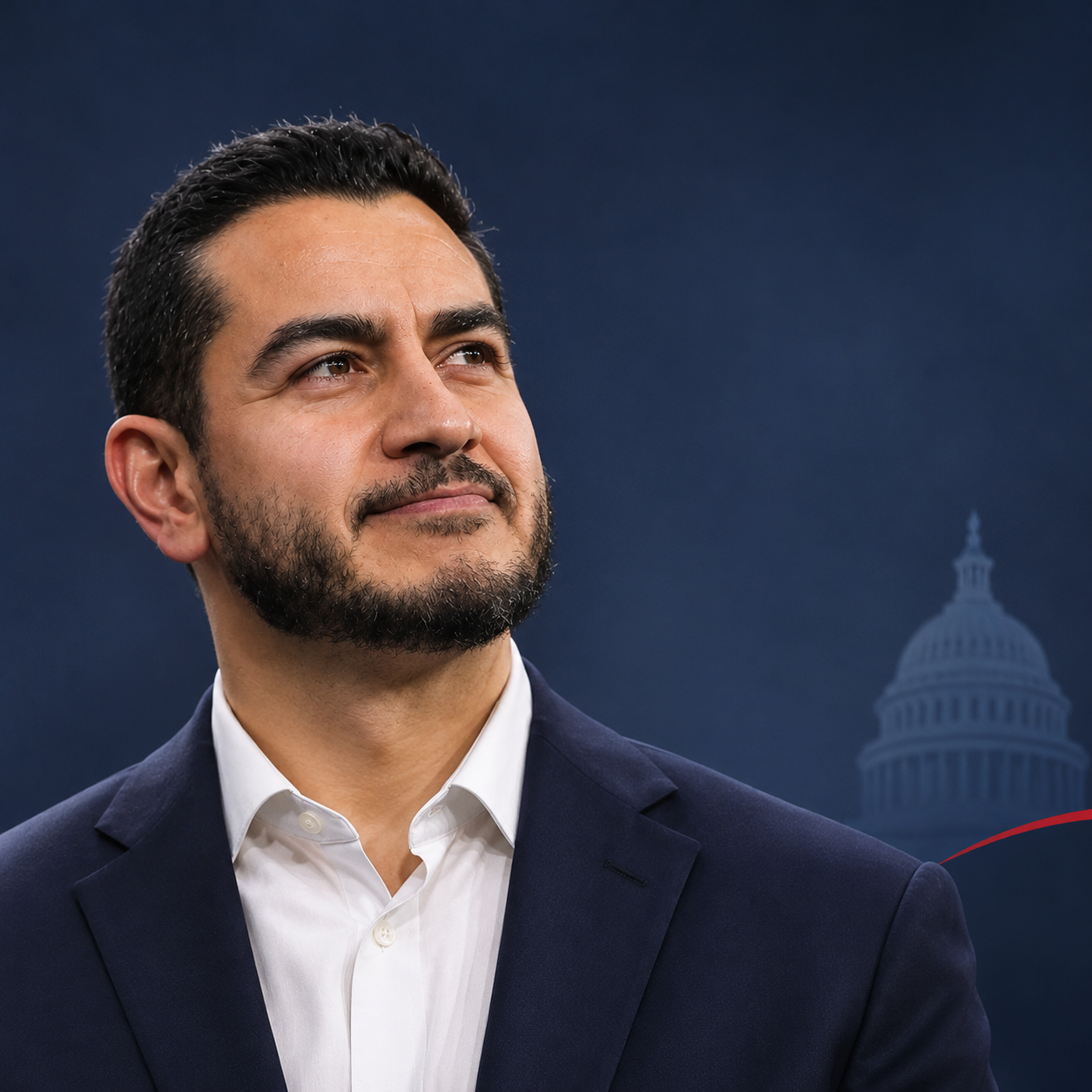
Among the most consequential victories was that of Abdul El-Sayed in Michigan, where the Democratic candidate defeated Republican Mike Rogers in the race for an open United States Senate seat. The Associated Press called the contest for El-Sayed, who is set to become the first Muslim American to serve in the Senate.
His victory was notable not simply because of its historical significance, but because of the political circumstances surrounding it. El-Sayed entered the general election after a divisive Democratic primary, faced substantial opposition from established political interests and became a target of attacks over his criticism of Israel and his Muslim identity.
Yet he emerged victorious in a state that remains central to American electoral politics.
The Michigan result was part of a much wider Democratic breakthrough. Across the country, Republican candidates lost ground in several states, including traditionally competitive and Republican-leaning territories. The party’s losses in the Senate and House suggest that the election was not merely a collection of individual candidate victories but a broader expression of dissatisfaction with the governing party.
El-Sayed’s victory represents a significant development in the political representation of Muslim Americans.
The 42-year-old former public health official, whose parents immigrated from Egypt, had previously served in public health leadership positions in Wayne County and Detroit. He first entered statewide politics in 2018, when he unsuccessfully contested the Democratic gubernatorial nomination.
Eight years later, he has moved from an unsuccessful gubernatorial campaign to a seat in the United States Senate.
His campaign centred on universal healthcare, economic affordability and reducing the influence of corporate money in American elections. These issues formed the foundation of a grassroots campaign that attracted support from prominent progressive figures, including Senator Bernie Sanders and Representative Alexandria Ocasio-Cortez.
According to Associated Press election results, El-Sayed received approximately 51.9 per cent of the vote, compared with 46.1 per cent for Rogers, with around 87 per cent of votes counted in the reported update.
The outcome was particularly significant given the political divisions within the Democratic Party.
El-Sayed had defeated Representative Haley Stevens in a closely contested August primary, despite opposition from prominent Democratic establishment figures. The primary attracted substantial outside spending, including nearly $30 million from the American Israel Public Affairs Committee opposing his candidacy.
The controversy did not end with the primary. Stevens subsequently endorsed Rogers in the closing days of the general election campaign, creating an unusual situation in which a prominent Democrat publicly backed the Republican nominee against her party’s candidate.
Questions also emerged over whether El-Sayed could consolidate support among Black voters in Detroit and Jewish voters in the surrounding suburbs.
The campaign therefore became a test of whether a progressive candidate could overcome internal party disagreements and assemble a sufficiently broad coalition in a politically competitive state.
The result suggests that El-Sayed’s economic message and grassroots mobilisation proved more electorally effective than his opponents had anticipated.
The politics of identity and the limits of religious attacks
El-Sayed’s victory also carries significance for the political participation of religious and minority communities in the United States.
His campaign unfolded against a backdrop of increasingly aggressive political rhetoric surrounding his Muslim identity, criticism of Israel and alleged associations with extremist organisations. Republican figures, including Trump, repeatedly attempted to portray him as a security threat, despite the absence of evidence supporting some of the allegations made against him.
Such attacks placed religion and national identity at the centre of a campaign that was otherwise heavily concerned with economic policy and healthcare.
El-Sayed rejected allegations linking him to the Muslim Brotherhood, saying he had never been a member of the organisation and would never become one.
The political consequences of these attacks deserve attention. Religious identity has increasingly become a point of political mobilisation in American elections, particularly as debates over immigration, foreign policy, national security and the Middle East become intertwined with domestic politics.
However, El-Sayed’s victory should not be interpreted as evidence that religious identity alone determined the outcome.
His campaign was built around issues affecting voters beyond any particular religious community. Healthcare costs, household expenses, corporate influence and economic uncertainty were central to his appeal.
The distinction is important. His election represents a historic breakthrough in representation, but it also demonstrates that a candidate from a minority background can compete on the same policy questions that shape the electoral fortunes of politicians across the country.
The broader significance lies in the combination of representation and political viability.
Michigan also offers a glimpse into the ongoing struggle over the future direction of the Democratic Party.
For years, the party has faced competing demands from its progressive wing and more moderate establishment. The disagreement concerns not only economic policy but also foreign affairs, campaign financing, social issues and the party’s relationship with organised interest groups.
El-Sayed’s primary victory exposed these divisions. His support for Medicare for All, criticism of corporate political spending and opposition to aspects of American policy towards Israel placed him at odds with sections of the party establishment.
The decision by Stevens to endorse Rogers highlighted how deeply those disagreements had affected the party’s internal relationships.
Yet the general election produced a different outcome from what establishment critics had feared.
El-Sayed’s victory provides progressives with a powerful argument that candidates advocating structural economic changes can win in competitive states rather than relying exclusively on support from safely Democratic constituencies.
It does not, however, settle the debate over the Democratic Party’s future. A single Senate victory cannot establish that every progressive candidate or policy proposal will perform equally well elsewhere.
The challenge for Democratic leadership will be to determine whether the coalition that produced these victories can remain united when legislative compromises become necessary.
Although Michigan attracted considerable attention, the national results point towards a broader problem for Republicans: voters’ dissatisfaction with economic conditions and the direction of the country.
The cost of living emerged as a central issue throughout the campaign. High fuel prices, household expenses and concerns about economic stability featured prominently in the political debate.
The war with Iran and the economic consequences associated with the administration’s policies added further pressure.
Republican candidates were required to defend the president’s record while attempting to reassure voters concerned about prices and their financial circumstances.
That proved difficult in several competitive states.
The Associated Press reported that Democrats made significant gains across the country, including victories in states that had supported Trump by substantial margins in the 2024 presidential election.
The results suggest that the political advantage Republicans enjoyed after the previous presidential election was not permanent.
Voters who supported Trump in 2024 were not necessarily prepared to support Republican candidates in every subsequent election. Midterm elections frequently provide an opportunity for voters to express dissatisfaction with the party controlling the White House.
In 2026, that dissatisfaction appears to have translated into a substantial electoral setback.
The results also underline an important distinction between campaigning on economic promises and convincing voters that those promises have been fulfilled.
Republicans had entered the election defending their governing record. Democrats, meanwhile, were able to direct attention towards the gap between the administration’s assurances and voters’ everyday financial experiences.
Democrats take control of Congress
Perhaps the most consequential national development is the Democratic Party’s victory in both chambers of Congress.
According to the Associated Press’s race calls, Democrats secured control of the House of Representatives and the Senate, ending Republican control of the federal legislature.
The results included important victories in Texas, South Carolina, Kansas, Iowa, Maine and other competitive states.
The outcome is particularly striking in Texas, where Democrat James Talarico secured a Senate victory in a state that has not elected a Democratic candidate to statewide office in more than three decades.
In South Carolina, Democrat Annie Andrews defeated Republican Senator Darline Graham, while Democrat Troy Jackson defeated Republican Senator Susan Collins in Maine.
These victories, alongside El-Sayed’s win in Michigan, indicate that the Democratic gains extended beyond traditional Democratic strongholds.
The implications for Washington are considerable.
With Democrats controlling both chambers, the administration will face a more difficult legislative environment during the remaining two years of Trump’s presidency.
Congressional investigations into administration policies, government conduct and the president’s political and business interests are likely to become major areas of confrontation.
Democratic control does not mean that the party can automatically implement its entire legislative programme. Presidential veto powers, Senate procedural requirements and internal disagreements within the Democratic caucus will continue to shape what can be achieved.
Nevertheless, the election has fundamentally altered the balance of political power in Washington.
The 2026 results also challenge assumptions about the stability of traditional Republican and Democratic voting patterns.
For decades, states such as Texas and South Carolina have generally been considered difficult territory for Democratic Senate candidates. Their victories suggest that the political map remains more fluid than party strategists sometimes acknowledge.
The results also raise questions about the durability of the coalition that brought Trump back to the White House in 2024.
Republicans had made gains among sections of the electorate, including younger voters and Latino communities. However, economic concerns and dissatisfaction with the administration appear to have weakened some of those advantages.
This does not necessarily mean that these voters have permanently shifted their political loyalties.
American voting patterns are influenced by candidates, local issues, turnout, economic conditions and the national political environment. A midterm election provides an important indication of political sentiment, but it is not a definitive forecast of the next presidential contest.
For Democrats, the immediate task is to retain the voters who helped deliver these victories. For Republicans, the results present an urgent question about whether their campaign strategy has become too closely tied to the president’s political standing.
What the results mean for 2028
The midterm elections will inevitably influence the early political calculations surrounding the 2028 presidential election.
For Democrats, the victories offer an opportunity to reconsider the balance between establishment politics and progressive mobilisation.
El-Sayed’s success, in particular, will strengthen arguments that candidates with outspoken positions on healthcare, corporate influence and foreign policy can appeal to voters in competitive states.
Other emerging Democratic figures, including Talarico, may also gain national attention following their victories.
However, the party will still have to address questions about its leadership, policy priorities and ability to maintain a coalition encompassing moderates, progressives, younger voters and minority communities.
Republicans face a different set of questions.
Trump’s endorsement did not prevent several Republican candidates from losing important contests. The results could intensify disagreements within the party over its relationship with the president, its economic policies and its approach to attracting independent voters.
Vice President JD Vance and other potential Republican presidential contenders will also have to navigate the political consequences of the party’s congressional losses.
But it would be premature to treat the midterm results as a settled verdict on the 2028 presidential election. Two years remain, and American politics has repeatedly demonstrated how quickly political circumstances can change.
Abdul El-Sayed’s election to the Senate will be remembered as a milestone in American political representation. For Muslim Americans, it marks an unprecedented moment in the country’s federal legislative history.
But the significance of the 2026 election extends far beyond one candidate or one community.
The Democratic victories expose the vulnerability of a governing party when economic dissatisfaction becomes widespread, its political messaging fails to address voters’ immediate concerns and its candidates struggle to separate their individual campaigns from an unpopular national political environment.
For the Democratic Party, the results provide an opportunity but also impose an obligation. Winning congressional control is one challenge; demonstrating that it can govern effectively is another.
For Republicans, the defeat is a warning that the political momentum generated by a presidential victory cannot be assumed to last throughout a governing term.
And for El-Sayed, the campaign’s conclusion marks the beginning of a different test.
The significance of becoming the first Muslim American senator will be considerable, but the expectations attached to that distinction will be equally demanding. His influence will ultimately be measured not only by the history of his election but by the policies he advances, the constituencies he represents and his ability to translate campaign promises into legislative action.
The 2026 midterms have changed the balance of power in Washington. Whether they also mark a lasting transformation in American politics will depend on what both parties do next.