
New Delhi, April 10: On 15 August 1975, the founding father of Bangladesh, Sheikh Mujibur Rahman, was killed, together with most members of his family, in a bloody military coup. The country, which he had brought to independence barely three and a half years before, was plunged into anarchy.
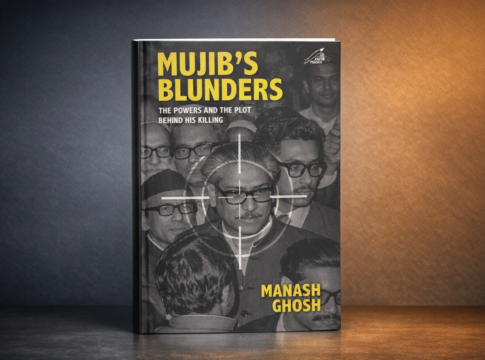
An insider report of the fatal miscalculations, conspiracies, and rivalries that enabled that assassination is a searing indictment of the role of power and plot behind the assassination of Mujib, published by Niyogi Books in a new book titled Mujib’s Blunders: The Power and the Plot Behind his Killing.
Ghosh is in a unique position to narrate this story. He is a graduate of St. Stephen’s College, Delhi, where he began his career at The Statesman in 1966 as a trainee journalist. His greatest moment occurred in 1971, when he documented the Bangladesh Liberation War across several battlefields as an embedded journalist, at great risk to his life. Three years after the war, he was assigned to Dacca (now Dhaka) as the bureau head of the paper. In 2021, his first book, Bangladesh War: Report from Ground Zero, was released. This follow-up, he writes, was entirely an exigence, to recount the grotesque and skeletal happenings that were the direct result of the personalities and ideological confrontations fought during the Liberation War.
Deep fault lines
According to Ghosh, even the Liberation War was planting the seeds of Mujib’s downfall. At the very beginning, he writes, the internecine conflict within the Awami League had assumed such threatening proportions that Tajuddin Ahmed, the prime minister of the interim government-in-exile, was nearly unseated by a pro-Pakistani, anti-Bangladesh faction within the party, which was entirely opposed to the disintegration of Pakistan.
The officer ranks of the Niyomito Bahini- the Bengali wing of the regular Pakistani Army that had left to join the Liberation War- were also split. One group, under Major Ziaur Rahman, was against the Indian Army training the Mukti Bahini since they did not wish the muktijoddhas (freedom fighters) to be referred to as made in India. The other party, loosely led by Major Khaled Mosharraf, did not see any harm in it, provided it accelerated the liberation.
Ghosh remembers the intense hatred of the Indian Army and India-trained muktijoddhas by Major Zia, which could be voiced at any moment in outbursts.
He writes: “I was sure that these deep fault lines in the ruling party and the Niyomito Bahini would be widened and extended, and recur again as soon as Bangladesh attained its independence; it was only a question of time.”
Tajuddin: The unrecognized hero
A major argument of the book is that Tajuddin Ahmed has been a victim of history to a very large extent. Ghosh writes that he has been waiting patiently over the past 50 years to read an objective, duly chronicled post-liberation war history of Bangladesh, but to no avail.
Virtually every book, he argues, hero-worshipped and idolised the role of Bangabandhu in the establishment of Bangladesh to the point where they completely omitted the role of Tajuddin.
Ghosh is unequivocal: “I am one who felt that in Mujib’s physical absence (he was lodged in a Pakistani jail throughout those nine months of the war), Bangladesh would never have been liberated had Tajuddin not been the prime minister of the interim government. His unique leadership capability to bring people of different political hues, professions, and religious faiths under the liberation war fold remains unparalleled and yet remains unacknowledged.”
Instead, Tajuddin was depicted as an Indian stooge because he had headed the government-in-exile in India and served as the key liaison with the Indian government. Instead of this pejorative appellation, Ghosh insists, Tajuddin was a real patriot.
Hand of foreign powers
The book documents numerous conspiracies by foreign powers to destroy the new nation. Pakistan, China, and the United States, Ghosh writes, were “smarting from their failure to keep Pakistan united and were seething for revenge.”
Their agents in Bangladesh did not take the time to finance their agents and their opportunists to plot and get their guns aimed at Prime Minister Tajuddin Ahmed.
To emphasie British machinations to weaken the Indian influence on the problem of the mode of transport of Mujib after his release on bail in Pakistan, the author refers to unclassified official British documents.
Ghosh refers to this as the attempt of the eternally treacherous Albion to retrieve a portion of the lost power in the course of the Liberation War.
Fear of Indian domination, anti-India indoctrination as Pakistanis for 25 years since 1947, and the perennial search for an identity different from India, Ghosh argues, “motivated political thinking and coalesced into creating a ‘Muslim Bangla’ identity, reinforcing religion as the foundation of national identity, as opposed to a secular one.”
This was spearheaded by the anti-Bangladesh elements and their supporters in the media.
Surprisingly, he continues, it was also endorsed by a powerful wing of the Awami League leadership that was opposed to Sheikh Mujibur Rahman and his idea of a free, secular, and socialist Bangladesh.
Mujib’s fatal blunders
The book critically looks at the successive blunders that Ghosh attributes to Mujib. Mujib defied his well-wishers and selected pro-Pakistani quislings to important posts in his government and the army.
Ghosh later claims that these people were later used by Zulfiqar Ali Bhutto and the Pakistani establishment to avenge the disintegration of their nation and embarrassing capitulation at Dhaka.
Mujib also marginalised Tajuddin Ahmed and other comrades who had been tested and who had implemented his instructions to guide the liberation war during the hard days. He set free notorious collaborators, thinking that they would change their minds and allegiance.
Although his ideals were secular, he established an Islamic foundation, which was hijacked by the Islamists to further their own agenda. His move to free more than 30,000 Pakistanis who were members of the Muslim League, Jamaat-e-Islami, and other Razakars gave a boost to the communal and anti-India constituency.
These factors, along with the Bangladesh media, attacked the 1972 India-Bangladesh Treaty of Peace, Friendship and Cooperation, claiming it was an Indian instrument of hegemonic design. The habit of labelling those who supported the treaty as Indian agents, Ghosh writes, started at this time.
The invitation to the Pakistani president to visit Bangladesh and Mujib’s overtures to Bhutto marked the completion of his phase of foreign policy, which involved cooling bilateral relations with India. Another political figure is Maulana Bhasani, a rabble-rouser whose vitriol against Mujib and India fuelled communal feelings, which resulted in the Hindus and their properties being “attacked”. Sabotage of Durga Puja pandals and idol “vandalism”, Ghosh adds, also became common in the Mujib era courtesy of Bhasani and the “communal” aspects that he fostered.
The final blow
The worst miscalculation that Mujib made, Ghosh says, was to initiate one-party rule under the BAKSAL (Bangladesh Krishak Sramik Awami League) and suppress the free press, even though Tajuddin had warned him bitterly that it would result in conspiratorial politics and put him in danger. It was his desperate need to get Islamabad to be heard to dispel the increasing influence of India in Bangladesh that eventually sent him to his grave.
The book records the questionable place of General Ziaur Rahman, the coups and counter-coups, and the summary executions of pro-Mujib military officers and soldiers under Zia. The revenge killings had a trail of turmoil behind them, as Bangladesh slowly separated its values and ideals from the Liberation War, and political power was seized by anti-India forces.
The anti-India mentality that Zia possessed is the reason, Ghosh writes, that he began assisting anti-India insurgent groups and aided their efforts to organize camps, arming and training them to attack India.
Lessons for today
The epilogue of the book by former Indian High Commissioner to Bangladesh Pinak Ranjan Chakravarty is a welcome change on the current events that resulted in the removal of Sheikh Hasina as the Bangladesh leader and subsequent flight to India.
According to Chakravarty, there are some strange parallels in the two conspiracies: the one that brought about the assassination of Mujib and the second one that brought about the overthrow of Hasina. The identical foreign USA-Pakistan-China axis, he says, has been the one that seems to have orchestrated the events of 2024.
It has taken Ghosh 50 years to narrate this story. The fact that Mujib has patiently gathered firsthand observations, held one-on-one interviews with key political figures, and has never hesitated to name names makes Blunders by Mujib a very important source in Bangladesh’s history.
It is an account of how a country that was born out of genocide and sacrifice was almost brought to its doom through the vile ignorance of its father of creation and the corruption of people who were supposed to love it the most.
Daanish Bin Nabi can be reached at daanishoffice@gmail.com