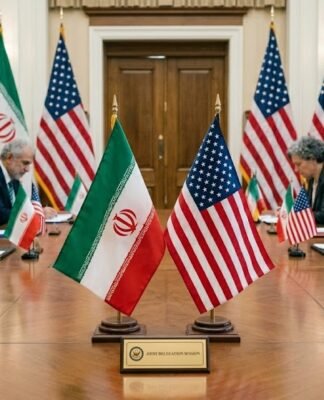
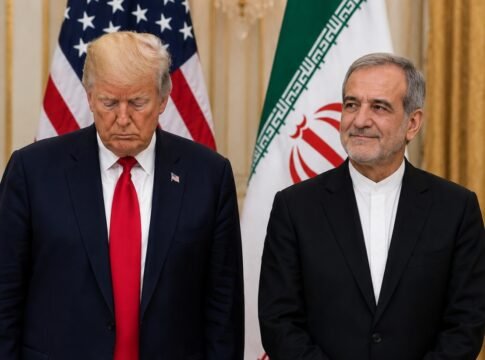

In a development that could reshape the volatile landscape of the Middle East, the United States and Iran have signed an initial memorandum of understanding aimed at halting a conflict that has raged for months, claiming thousands of lives and disrupting global energy supplies. President Donald J. Trump and Iranian President Masoud Pezeshkian affixed their signatures to the document, which outlines an immediate cessation of hostilities, the reopening of the strategically vital Strait of Hormuz, and a framework for more comprehensive negotiations in the weeks ahead.
The agreement, reached after intense shuttle diplomacy primarily facilitated by Pakistan and Qatar, marks a provisional end to direct confrontations that escalated earlier this year amid longstanding tensions over Iran’s nuclear program, regional proxy conflicts, and retaliatory military actions. While ships have already begun navigating the reopened waterway—a critical artery for roughly one-fifth of the world’s oil shipments—officials and analysts alike emphasize that the deal remains precarious, dependent on strict compliance and the resolution of the profound mutual suspicions that have defined U.S.-Iran relations for decades.
According to a senior U.S. official who spoke with reporters on the condition of anonymity, the memorandum encompasses 14 key points. These include the “immediate and permanent termination of military operations on all fronts, including in Lebanon,” commitments to respect national sovereignty, and prohibitions on interference in each other’s internal affairs. Iran has agreed to take initial steps toward diluting its stockpile of highly enriched uranium, while the United States has pledged to issue sanctions waivers on Iranian oil exports and begin dismantling its naval blockade within 30 days.
This breakthrough comes against a backdrop of escalating violence that intensified during the early months of 2026. Proxy skirmishes involving Iran-backed groups such as Hezbollah in Lebanon, combined with direct strikes between U.S.-aligned forces and Iranian assets, pushed the region toward a broader conflagration. By the time mediators intervened, the fighting had exacted a heavy toll, displacing hundreds of thousands and sending shockwaves through international markets as Iran restricted access to the Strait of Hormuz in response to perceived aggression.
The path to the memorandum was neither swift nor straightforward. Weeks of back-channel communications and high-level diplomatic engagement culminated in an announcement by Pakistan’s Prime Minister Shehbaz Sharif, who played a central mediating role. Electronic signatures were exchanged earlier this week, with a formal ceremony anticipated in Switzerland. The 60-day window now opening is intended for intensive discussions on more contentious issues, including the full scope of Iran’s nuclear activities, timelines for sanctions relief, and mechanisms for verifying compliance.
For Iran, the deal represents a potential economic reprieve after prolonged isolation and the cumulative impact of sanctions and the blockade. Reopening oil exports could provide a vital influx of revenue, though the scale of reconstruction needs across affected areas remains daunting. President Pezeshkian described the memorandum as a “historic document” rooted in principles of mutual respect, signaling Tehran’s willingness to stabilize its economy and re-engage with the international community on more equitable terms.
In Washington, the Trump administration has portrayed the agreement as a pragmatic success that safeguards core American interests in energy security and nonproliferation without committing to open-ended military involvement. Trump, in public statements, celebrated the reopening of the strait and directed the swift removal of the blockade, framing it as a victory for global commerce. Yet the deal has drawn criticism from various quarters, with some arguing that concessions on sanctions and delayed nuclear resolutions could embolden Iran in the long term.
The agreement’s most immediate test lies in its application to parallel conflicts, particularly Israel’s ongoing operations in Lebanon. Iranian officials have insisted that the memorandum requires Israeli forces to withdraw from southern Lebanon, where they have maintained a presence amid clashes with Hezbollah. However, Israeli Prime Minister Benjamin Netanyahu has firmly rejected any such obligation, stating that Israeli troops will remain in designated security zones “for as long as necessary to protect our citizens.”
This stance has introduced significant friction. U.S. diplomats have characterized the Lebanon-related provisions as aspirational, underscoring Washington’s commitment to Israel’s right to self-defense. Vice President JD Vance reiterated in recent interviews that the primary focus of the memorandum remains bilateral U.S.-Iran relations, with regional de-escalation being pursued through separate channels. Nevertheless, continued Israeli military activity risks eroding Iranian confidence in the process and reigniting broader hostilities.
The war’s origins can be traced to an intricate tapestry of unresolved grievances. Iran’s advancing nuclear capabilities, coupled with its support for proxy militias across the region, have long been flashpoints. Escalations in early 2026 involved direct exchanges, including strikes on energy infrastructure and naval confrontations, ultimately prompting the United States to impose a blockade on Iranian ports. The human cost has been staggering, with widespread displacement in Lebanon and beyond, alongside civilian casualties that have drawn condemnation from international humanitarian organizations.
Energy markets reacted with relief to news of the agreement. Oil prices declined sharply as expectations grew for normalized flows through the Strait of Hormuz. Stock indices in major financial centers rallied, reflecting broader optimism that economic stabilization in the region could help mitigate inflationary pressures worldwide. French President Emmanuel Macron, following discussions with Trump at the G7 summit, characterized the framework as a promising step toward lasting regional peace.
Yet implementation challenges abound. Experts caution that restoring full maritime traffic could require weeks or even months due to lingering security concerns, insurance hesitancy, and logistical complexities. Minesweeping operations and confidence-building measures among shipping companies will be essential. Gulf states, including Qatar, have expressed guarded support, viewing the deal as a foundation for a more inclusive regional security architecture while stressing the importance of addressing underlying rivalries.
Humanitarian repercussions from the conflict continue to demand urgent attention. In Lebanon, where displacement has exceeded one million people, reconstruction efforts face immense hurdles. International aid organizations are mobilizing resources, but their effectiveness hinges on sustained ceasefires and political will. Reports of infrastructure damage and civilian suffering underscore the need for mechanisms beyond geopolitics to support recovery.
Looking ahead, expectations remain tempered among diplomats and analysts. Success will depend on verifiable adherence to the memorandum’s terms, continued high-level engagement, and effective management of potential spoilers—ranging from domestic hardliners in both capitals to non-state actors operating with relative autonomy. A relapse into escalation could have severe consequences for global oil markets, nuclear nonproliferation efforts, and overall stability in the Middle East.
The technical negotiations scheduled in Switzerland will serve as a critical barometer of the agreement’s viability. Key agenda items include limits on uranium enrichment, robust verification protocols, phased sanctions relief, and the disposition of frozen Iranian assets. Broader discussions may eventually encompass Iran’s ballistic missile program and its network of regional allies, though these issues fall outside the scope of the initial framework.
As one senior U.S. diplomat observed, the memorandum provides essential breathing room but stops short of resolving entrenched animosities. “This is the beginning of the end of the war,” the official remarked, “but the end itself will require far more—sustained diplomacy, mutual compromise, and a shared recognition that perpetual confrontation serves no one’s long-term interests.”
The agreement’s regional ripple effects extend far beyond the immediate signatories. Members of the Gulf Cooperation Council have welcomed the prospect of reduced tensions, viewing normalized energy flows as beneficial for collective economic security. Oman and the United Arab Emirates, in particular, have quietly supported mediation efforts, emphasizing dialogue as the best means of preventing future disruptions.
In Europe, reactions have been cautiously optimistic. Leaders in France and Germany have urged all parties to honor the spirit of the agreement while pressing for swift progress on nuclear safeguards. The European Union has signaled readiness to contribute to reconstruction initiatives in Lebanon and potentially Iran, contingent on verifiable de-escalation.
Domestically, the accord has elicited a range of responses across the United States. Bipartisan support for Israel remains a complicating factor, with some lawmakers expressing concern that the Lebanon-related provisions could strain the longstanding alliance. Progressive voices, however, have applauded the emphasis on diplomacy and called for robust humanitarian assistance to address war-induced suffering.
For Israel, the agreement presents a complex strategic calculation. While it may ease some immediate pressures related to Iran, the unresolved situation in Lebanon continues to pose security challenges. Netanyahu’s government has maintained that operations against remaining threats will continue, a position Tehran has warned could jeopardize the broader framework.
Analysts at institutions such as the Brookings Institution and the International Crisis Group have highlighted the memorandum’s potential as a confidence-building measure. Yet they caution against excessive optimism, pointing to historical precedents in which interim agreements faltered amid disputes over enforcement. As many observers note, the success of the accord may ultimately depend on the details of verification mechanisms and sanctions snap-back provisions.
Reconstruction in war-affected areas, particularly Lebanon, will require coordinated international efforts. Estimates suggest billions of dollars in damage to infrastructure, housing, and agricultural land. The United Nations and the World Bank are preparing assessments, but significant funding gaps remain. A proposed $300 billion U.S.-backed recovery fund, if realized, could prove transformative, though congressional approval and implementation timelines remain uncertain.
The nuclear dimension remains the agreement’s most sensitive element. Iran’s commitment to dilute portions of its enriched uranium stockpile provides a starting point, but comprehensive verification will be essential to prevent future crises. The International Atomic Energy Agency is expected to play a central role in monitoring compliance, building on previous frameworks that have periodically strained relations between Tehran and Western powers.
Public sentiment in Iran appears mixed. Many citizens express hope for economic relief and an end to isolation, while hardline factions warn against what they view as excessive concessions. Similar dynamics are evident in the United States, where the agreement is being interpreted through competing lenses of national security and partisan politics.
Environmental concerns have also emerged in the aftermath of the conflict. Reports of potential contamination resulting from strikes on energy facilities and the use of certain munitions in Lebanon have prompted calls for independent assessments. Addressing these legacies will be essential for long-term public health and environmental recovery.
As the 60-day negotiating period begins, attention is shifting toward parallel diplomatic efforts involving Israel, Lebanon, and other regional stakeholders. Mediators from Pakistan, Qatar, and potentially Oman are expected to intensify efforts to bridge remaining gaps. The coming weeks will test whether the initial breakthrough can evolve into a durable framework for coexistence.
Ultimately, the memorandum represents a calculated pause rather than a final resolution. Its success will depend on the ability of all parties to navigate deep-seated distrust, manage potential spoilers, and deliver tangible benefits to affected populations. For now, the world is watching as diplomats prepare to convene in Switzerland, hopeful that pragmatism can chart a path away from the brink and toward a more stable future.