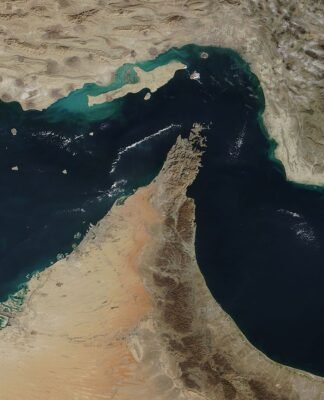
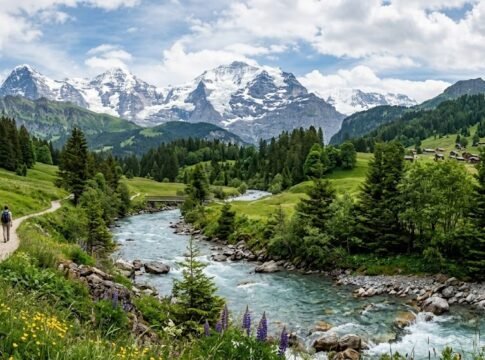

A few decades ago, the common perception of the “environment” was largely aesthetic and localized; most people viewed it simply as the “greenery” or the natural scenery outside their windows, such as local trees, parks, and plants that added beauty to the landscape. It was seen as an ornamental, endless resource that existed independently of human activity. However, in the present context, our understanding has shifted from aesthetics to existence, defining the environment as the entire complex web of air, water, and climate—the very “lungs” and “thirst” of humanity that allow life to survive.
As the human population expanded rapidly and unexpectedly, the demand to meet burgeoning needs transformed the environment from a passive backdrop into a global emergency. This shift highlights that the real meaning of the environment is the existence of life itself, which is now threatened by the rapid degradation of our surroundings. To meet escalating human needs, we started cutting down forests and destroying delicate natural areas, a move that has caused a massive environmental crisis impacting every living being, from the smallest insects to the largest blue whales.
Development is the need of the hour and is urgently required; however, the continuous drive for development in an unsustainable way has led to enormous depletion of the natural environment, with global warming emerging as one of the most serious consequences. By rapidly destroying forest cover and burning fossil fuels like coal, oil, and gas to power factories and vehicles, we release greenhouse gases such as carbon dioxide (CO₂) and methane (CH₄), among others, which act like a blanket, trapping heat in our atmosphere. While forests naturally act as carbon sinks, their rapid shrinking removes the planet’s vital filtration system, destabilizing the ecological balance.
This greenhouse effect is steadily raising global temperatures and triggering a disastrous chain reaction, including the melting of glaciers at alarming rates and rising sea levels that threaten to submerge low-lying islands and coastal cities. In India, places like Mumbai, Kolkata, and the Lakshadweep Islands are at high risk. Globally, major cities such as New York City, Miami, Jakarta (which is sinking so rapidly that Indonesia is relocating its capital), Bangkok, Dhaka, and Venice are also facing severe threats from rising sea levels. These urban centers represent a global trend where coastal populations are increasingly vulnerable to climate change.
We are also witnessing unprecedented rainfall patterns, extreme floods, prolonged droughts, and deadly heatwaves, leading to a staggering loss of life and property. This challenge has become a critical global concern, driven by the realization that if these activities continue, the existence of life on Earth will become extremely difficult. Consequently, international organizations like the United Nations (UN) and the Intergovernmental Panel on Climate Change (IPCC) are working tirelessly to find solutions through global treaties such as the Paris Agreement. At the same time, educational institutions have made Environmental Studies a compulsory subject to sensitize the next generation, while NGOs are addressing critical issues such as water pollution caused by plastic and industrial waste, which destroy marine habitats.
In the Indian context, the problem has worsened significantly. The Himalayas, known as the “Water Tower of Asia” and the lifeline for millions, are under tremendous stress. Himalayan glaciers are melting faster than ever, threatening the country’s water systems. This fragile mountain ecosystem has been severely damaged by unplanned construction, leading to frequent and devastating natural hazards in recent years. Regions like Jammu and Kashmir are not immune to these changes, representing a looming challenge for future survival.
The strategy for protecting these natural treasures requires serious and immediate action before the situation gets out of hand. The “fight” can be won through reforestation and conservation, where we must not only stop clearing forests but also actively rebuild them to restore the planet’s ability to breathe; a rapid energy transition toward clean sources like solar, wind, and green hydrogen, which is no longer just an option but a necessity; and the judicious consumption of resources—consuming not according to our desires, but according to our needs.
This requires a massive, collective effort at all levels, involving active community participation where everyone works hand in hand. The fight for the environment is, ultimately, the fight for our own survival. We must ensure preservation and sustainability for future generations, or face a world where the “scenery” we once took for granted is no longer there to support us.
Dr Yudhbir Singh, Associate Professor, Department of Geology, University of Jammu, Jammu and Kashmir, India.