In the constant stream of photographs from the Middle East, the world has become used to a certain framing. It makes one of history’s richest relationships appear as a one-dimensional, simplistic axis: an unchanging, near-genetic Muslim hatred of Jews.
With rockets and airstrikes wiping whole city blocks flat in the Middle East, the comfortable Western belief repeats itself, that this war is a battle of some old tribal bloodlust, and another episode in some off-booked Islamic war with the Jewish people.
However, history tells a different story, and this story must be repeated now, not as a political argument or a whataboutism defence of present-day acts, but as a systematic rewriting of the historical record that has been wiped from collective consciousness.
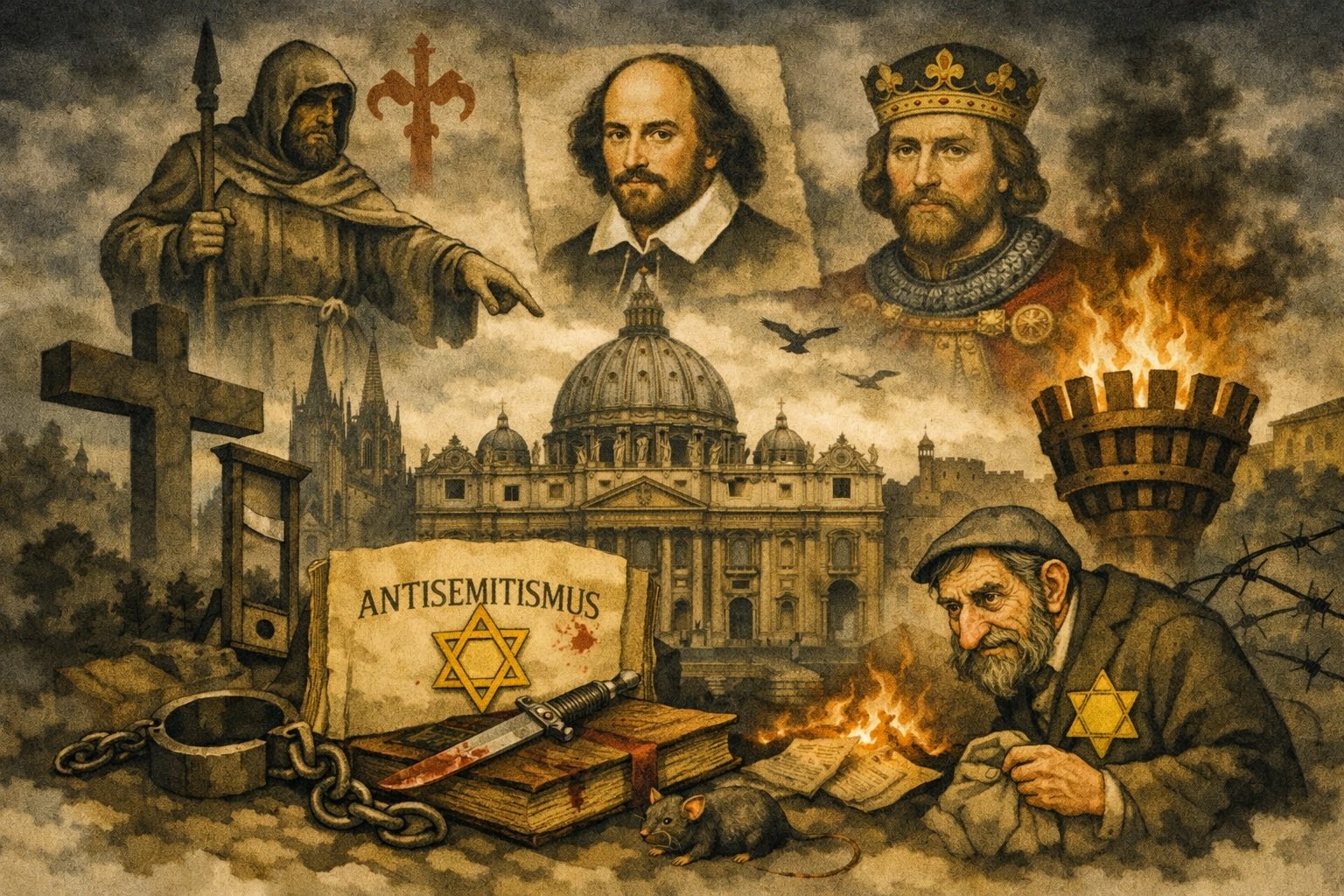
And the fact is this: long before the ovens of Auschwitz, long before the pogroms of East Gunterman, long before Shakespeare had ever dipped his quill to parchment to engrave the poisonous archetype of Shylock, the Muslim world had provided to the Jewish people that which they could nowhere else achieve in all the world—not simply life, but life and prosperity.
The irony could not be more crushing or more urgent to express. The very people whom centuries of European oppression forced to seek refuge in the Islamic world are now, with American and European weapons, meting out to Palestinians the same kind of persecution their forebears escaped with Muslim help. This is history, written in the archives of three continents, waiting to be regained by a generation taught only one side of a complex tale.
Europe: The birthplace of anti-Semitism
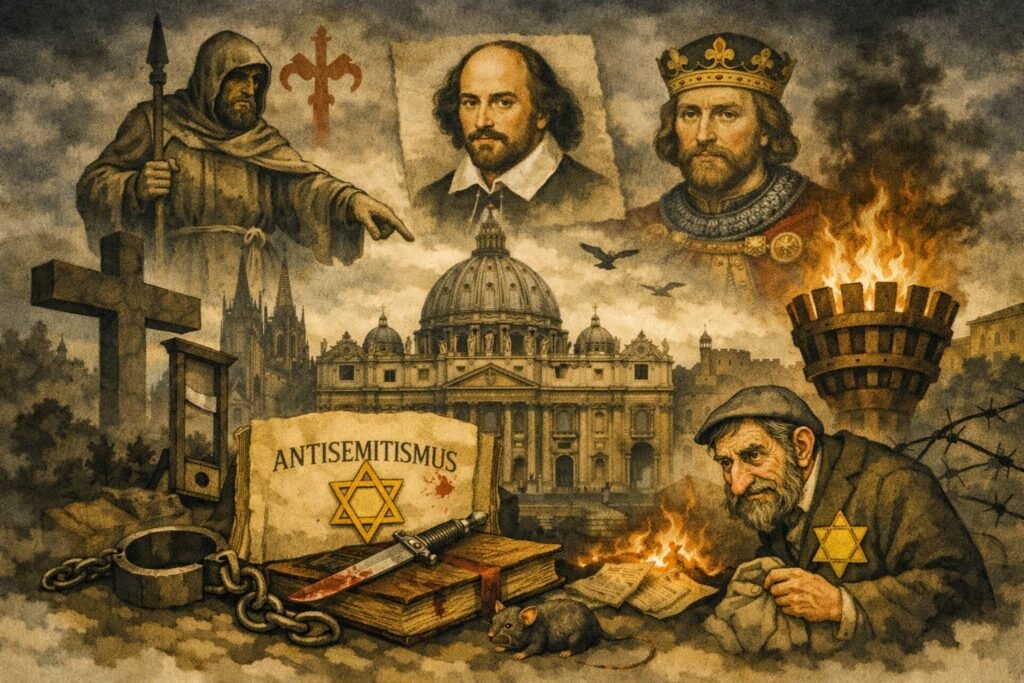
One needs to know what Jewish life was under Islamic rule to understand the contrast. The other, for nearly two thousand years, was Christendom—a civilisation whose very theological foundations built hatred against the Jewish people, leading to horrors over fifteen centuries of European history.
It is important to understand the theological foundations on which all that followed was explained. In the original story, Christianity blamed Jewish people for killing its “god”. The accusation of killing the “Son of God”, of murder, was not an outer fringe doctrine spoken in remote monasteries. It was the preaching of the church, and in every pulpit, it was an official doctrine of the church. It had been incorporated into every catechism, and it was even in the very liturgy of Christian worship.
The Jews were, so to speak, even today in Christian theological literature, “Christ-killers”. This was not a metaphor. This was interpreted literally, historically, and as collective guilt, which is transferred between generations and every Jewish child who was born into the world had been marked as a person who was guilty of the most heinous crime of all crimes.
Out of this theological poison emerged all later forms of European anti-Semitism. By the early Middle Ages, Jewish life was reduced to barely tolerable status. The word ghetto, now used for urban poverty, was coined in the thirteenth-century Venice to designate walled districts where Jews were forcibly segregated. They could not own property, engage in good occupations, ascend social ranks, intermarry, worship publicly, or be citizens—only tolerated as long as they served some purpose Christians could not.
That role was moneylending, which was tragic and has consequences to this day. The medieval church ruled that charging interest on loans, usury, was a mortal sin that would send a Christian soul to hell. But economies cannot function without credit. Thus, Jews, barred from other trades, were channelled into this one and became the proto-bankers of Europe.
In a twist of history, they were then despised for succeeding in the only field allowed to them. The connection of Jews with money and banking, the very stereotypes fuelling centuries of anti-Semitic propaganda, was not a Jewish choice but a result of Christian limitations. The church prohibited Christians from lending money, pushed Jews into the vacuum, and then condemned them for filling it.
The Crusades, the great adventure of the Christian warlike spirit, showed how deep this hatred ran and still amazes the conscience. In 1095, when Pope Urban II issued the First Crusade to “free” Jerusalem from Muslims, the armies gathered in Europe did not wait to reach the Holy Land before starting their holy war. In 1096 and 1097, they turned their swords on Jewish communities as they marched east through Germany and France. Their logic, recorded in chronicles, was cold-blooded: since they were to avenge “Christ’s death” in Jerusalem, why not first avenge it on the Jews who were their neighbours?
What followed was the first massive wave of European pogroms. Entire Jewish communities in German cities were destroyed. Children and women who sought safety in synagogues were burned inside them. Chronicles document in appalling detail how synagogues were burned with babies still inside, and how whole cities were systematically emptied of Jews. This was not mob justice; it was genocide with religious approval, carried out by men who believed they were doing “God’s work”.
This hatred of Jews was institutionalised. In 1215, the Fourth Lateran Council, held by the Vatican, adopted decrees that formalised Jewish repression throughout Christendom. Jews had to wear special clothing, live in separate quarters, and avoid coming out during Christian Holy Weeks. These were not local ordinances but church law, obligatory on all Catholic kingdoms. The official church institutionalised discrimination as the will of God.
The expulsions grew mechanical as they came. In 1290, the King of England, Edward I, issued an order that all Jews should leave his kingdom, and they must never come back. For four centuries, following the King’s orders, there were no Jews in England. William Shakespeare, who wrote his plays in the 1590s, probably never saw a Jewish person in his life. However, when he wrote the character of Shylock in The Merchant of Venice, he tapped a well of anti-Semitic stereotypes that was so deep and so pervasive that his readers would immediately identify with the stereotype and react to it. European air was the venom, breathed in with every breath, diffused on all cultural media.
Then, in 1492, a year etched in the memory of Jews and Muslims alike, for reasons history rarely connects. In 1492, Ferdinand and Isabella completed the Reconquista by conquering the last Muslim kingdom of Granada and issued the Alhambra Decree, which set half a million souls adrift.
The Decree of Alhambra ordered the expulsion or forced conversion of all Jews in Spain. Three hundred thousand to five hundred thousand Jews, no one knows the real number, were given a choice: baptism, exile, or death. Those who had lived in Iberia for a millennium, whose lineage traced to the Roman Empire, were told to leave their homes, belongings, language, and history, or be burned.
This did not constitute the deed of a fringe fanatic, but it was a combined monarchy of Spain, the greatest state in Europe, with the full approval of the church, which was setting a pattern that other Christian kingdoms were more than willing to copy. And this brings us at last to Hitler.
When the Führer began implementing his Final Solution during the 1930s and 1940s, he was by no means creating something new. He was exploiting an anti-Semitic vein that the Christian civilisation of Europe had been tapping over fifteen centuries. The burning synagogues of 1096 led to the logical conclusion of the gas chambers of Auschwitz. The very concept of anti-Semitism had been created by Europeans, on behalf of Europeans, to evoke a phenomenon which was, as the history of the world reveals without room for doubt, European and Christian to its very core, a hundred per cent.
Islamic alternative: Refuge, safety and prosperity
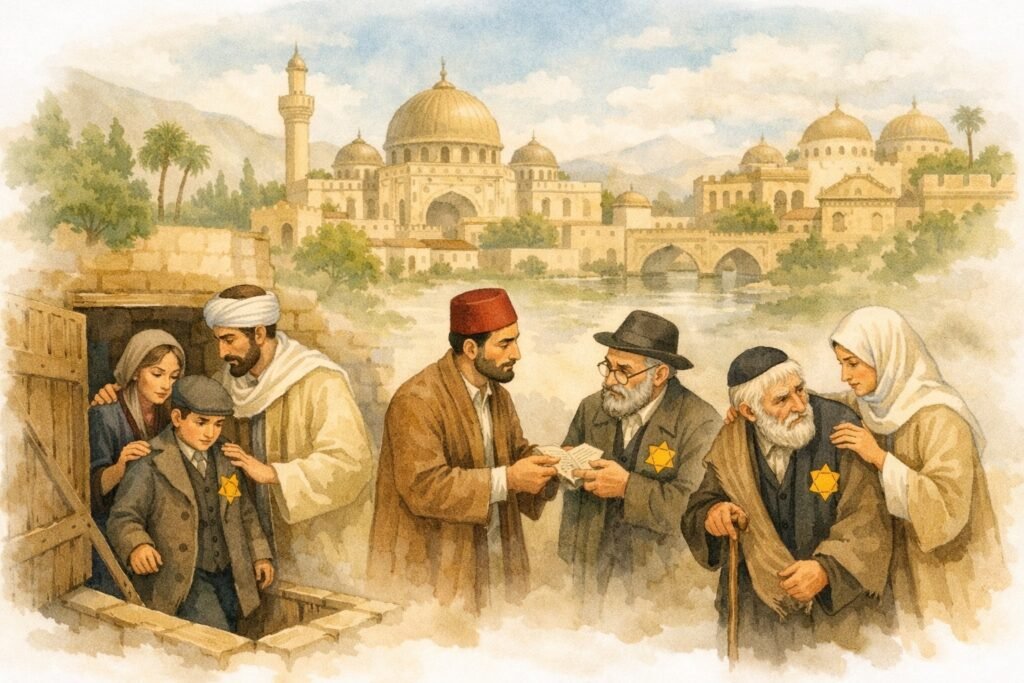
Now turn the map, and peep south and east, to the countries where the crescent, rather than the cross, ruled the horizon. The story here could not be farther otherwise—and it is this difference which the modern world has forgotten so completely.
As the forces of Islam in the seventh century swept out of Arabia and conquered territories as far as Spain and Persia, they encountered Jewish communities that had lived in these regions for thousands of years.
In Iraq, especially Baghdad, Jews traced their settlement to the Babylonian exile of the sixth century BCE, over twelve centuries before Islam. Several hundred thousand Jews lived in Iran, at Isfahan and other cities, since Persian times.
In Yemen, Jewish communities predated Islam by centuries. These were not small or distant groups but significant communities with their own institutions, learning, and customs rooted deep in antiquity.
So, what did Islam do to these pre-Islamic peoples? The opposition to Christian Europe could not be so obvious. Where Christians perceived the “Christ-killers” to be segregated, expelled, or converted at sword-point, Muslims viewed them as ‘Dhimmis’, the communities which trusted in the protection of their countries, to be governed under their own laws, to worship in their own manner, and to regulate their own internal matters. This was not informed by a contemporary concept of secular tolerance but by the directives of the Quran and the life of the Prophet Muhammad (PBUH). The Quran states that there is no compulsion in religion in a verse that guided Islamic policy towards non-Muslims for centuries to come.
The largest initial exhibition of this principle was most dramatic with the conquest of Jerusalem. When Caliph Umar ibn al-Khattab entered the Holy City in 638 CE, he discovered a place that had been under Christian control for over three centuries. And what had been of Jews under the Christian rule? They were absolutely prohibited, separated, and forbidden. No Jew was allowed to enter Jerusalem. There could not be any synagogue in its walls. Judaism had its holiest place within the city, the Temple Mount and it had been declared by the Christian decree a judenrein.
Caliph Umar reversed this. At his request, Jewish families were allowed to visit Jerusalem after centuries. He gave them the freedom to build synagogues, practice their faith, and create a community near their holiest place. The earliest synagogue erected in Jerusalem under Muslim protection was built after the Temples had been destroyed, by Muslim edict, in direct defiance of centuries of Christian policy. This was not an exception but a trend that persisted in the Islamic world for the next 1,300 years.
Think of Baghdad at its best time. When the Abbasid caliphs established their capital and built the House of Wisdom (Bayt al-Hikma), they did not staff it on religious grounds but on the basis of competence. Jewish and Christian scholars were the ones who preserved and transmitted the philosophical and scientific heritage of ancient Greece; they had little to do with it beyond knowing the languages. The custodians of the knowledge of the best intellectual centre of the medieval world became Jewish minds. They were not only tolerated but also desired, paid well, and assigned prestigious and authoritative roles.
The most surprising of all the Jewish thriving under Islam is, however, that of the Muslim Spain (Al-Andalus), that place where Muslims, Jews, and Christians built a civilisation that amazes even centuries later.
Around the year 1000 CE, a thousand years ago, the prime minister of Granada, the second most powerful man in the kingdom after the Sultan himself, was a rabbi named Ismael ibn Naghrela.
A Jewish religious teacher and Torah scholar rose to become the prime administrator, vizier, and trusted executive of a Muslim kingdom. As the Christian Reconquista began its attack on Muslim Spain, the leader of the Muslim forces against the crusaders was this very Jewish vizier, Ismael ibn Naghrela.
History records that he wore armour inscribed with Quranic verses, led Muslim armies, and fought Christian invaders who were also burning Jewish settlements elsewhere in Europe. A rabbi led Muslims in jihad to defend a Muslim kingdom that had offered him shelter and honour.
Islam’s gift to Jewish thought
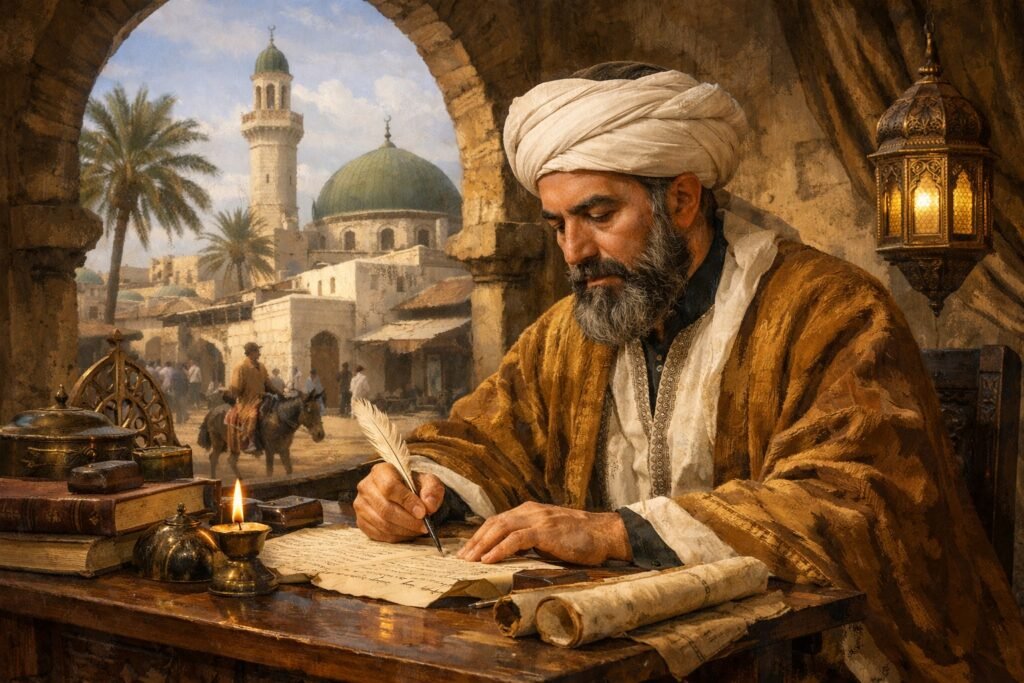
No man more clearly shows the extent of Islamic influence on Jewish life than Moses Maimonides. To his countrymen, Moses Maimonides, or Rambam, was the most venerable theologian in Jewish history. And where was he born, brought up and schooled? Marquis Cordoba, the treasure of Muslim Spain. Where did he study? In Islamic madrasas, with the Muslim students. They not only learnt the Jewish books but the entire spectrum of Islamic scholarship. What was his spoken, written and thought language? Arabic—linguistic, refined, intellectual Arabic.
Maimonides was a Jew in a Muslim world, but he also circulated in that world as a member of its civilisation, rather than being an outsider to it. His biographers observe that he was a praying Muslim who dressed like a Muslim and recited the Quran with the fluent nuances of an indigenous speaker. Nobody forced him. It was simply that he breathed it, that culture was growing him, that intellectual universe that was shaping his mind. What is definite is that by the time he was able to resume his career as a rabbinical scholar and started writing, he was carrying into the process the entire intellectual inheritance of the Islamic civilisation.
Maimonides’ outcome changed Judaism permanently. Before Maimonides, Judaism lacked much systematic theology. It was a law and practice and orthopraxy, or doing the right things, and not orthodoxy, or belief in the right things. Jews were concerned with the way you behaved, as opposed to what you thought. Creeds, catechisms, and theological summas, they had none.
Maimonides changed all that. Drawing directly on Al-Farabi and Al-Kindi and the theological techniques he studied at the madrasa, he wrote the first systematic theology in Jewish history. His arguments for the existence of God, his vision of divine qualities, and his concept of prophecy all bear the stamp of Islamic thought. This intellectual debt is well documented, including in the Stanford Encyclopedia of Philosophy’s entry on The Islamic Influences on Moses Maimonides.
Maimonides, the greatest Jewish theologian, wrote his masterpiece in Arabic, influenced by Islamic education, and served as the personal physician to Salahuddin al-Ayyubi, the Sultan who returned Jerusalem to the Jews after its capture by the Crusaders.
On the other side of the globe, Christian Europe was incinerating Jews, while the most prominent Jew in history was attending Islamic schools, learning in Arabic, and serving a Muslim conqueror. Salahuddin, the hero of Islam, entrusted his health to a Jewish doctor. Maimonides accompanied the Sultan’s court, cared for his illnesses, and wrote his philosophical works when not practising medicine. This was not unique; it was characteristic of a civilisation that valued talent over lineage.
The Ottoman refuge
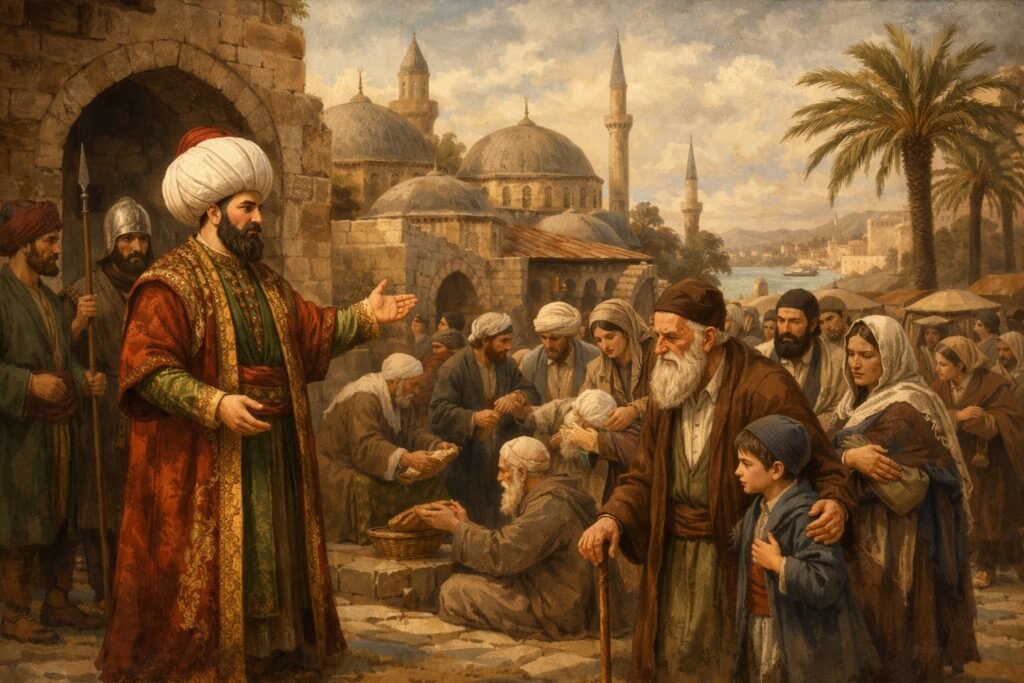
Go back to the year that changed everything: 1492. The half-million Jews expelled from Spain, where did they go? Not to Christian Europe. The same animosities that drove them from Spain existed wherever the cross dominated. They escaped south and east, to the territory of Islam.
Ottoman Emperor Sultan Mehmed II, who learned of the expulsion, issued a decree that has become one of the most ethically illuminating in the history of religious coexistence. “Whichever Jew escaped from Spain”, he said, “he would be welcomed in the territory of the Ottomans. Any official who hindered their settlement would be punished by the Sultan himself. Thou hast, and with a touch of sarcastic thanksgiving, added: thou cannot fault Ferdinand and Isabella, sending us their best brains, their most competent people. We will take them gladly.”
And such they were, hundreds of thousands of Jews, with the keys to the houses that they would never see again, to the memories of synagogues that they would never visit, to the language of a country that had turned its back on them. They established themselves in Morocco, Tunisia, Egypt, Syria, Iraq, and Yemen. They created new settlements, created new synagogues, and revived ancient customs. These Sephardic and Mizrahi Jewish communities had survived and prospered for four hundred and a half centuries, 1492 to 1947, under the patronage of Muslim rule, keeping their Spanish-Jewish language, Ladino, and their own unique customs, and enriching the societies that had accommodated them.
Holocaust
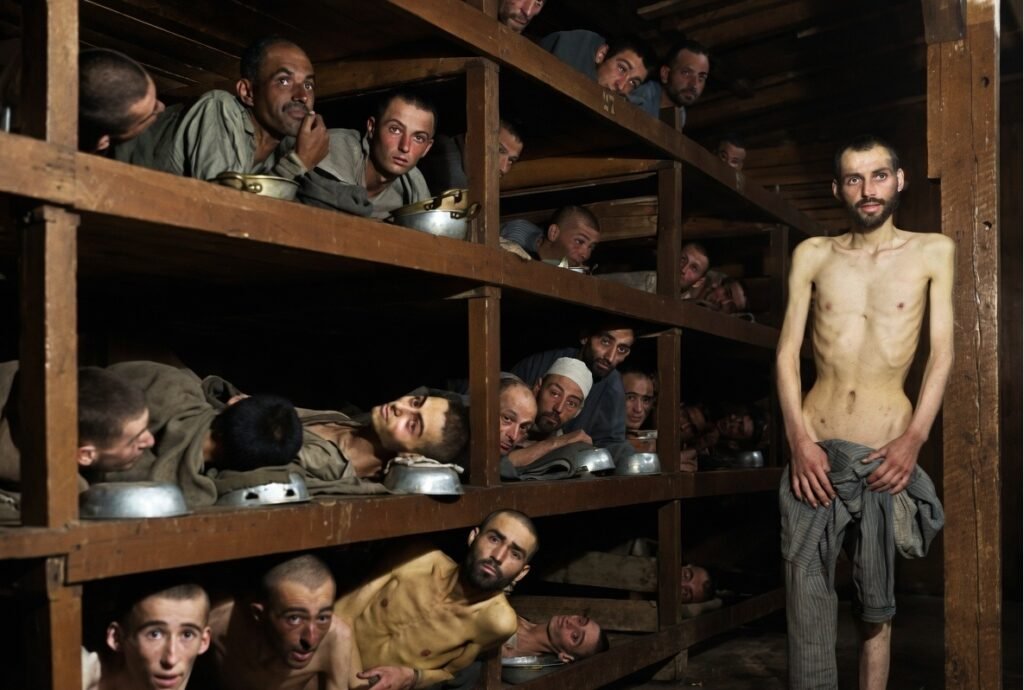
And yet when the next European wave of persecution broke upon them, the Germany of Hitler resolved to kill all the Jews in Europe, then again, Muslims came forth to their defence.
The history of Muslim salvation during the Holocaust is worth being trumpeted at the very top of every minaret, every synagogue, but it is virtually unknown.
In Morocco, Sultan Muhammad V, who was under French occupation, was instructed by the Vichy government to surrender the Jews of Morocco so that they could be deported.
“No, No, No, No,” he answered. “These human beings are our siblings. They have been with us for centuries. They will not be handed over.” Despite the pressure of the French, even the threats of the Nazi, he saved his own Jews, and the huge majority survived the war. Tunisia saw similar refusals to surrender the Jews, while the Muslim communities in Bosnia rescued Jewish neighbours.
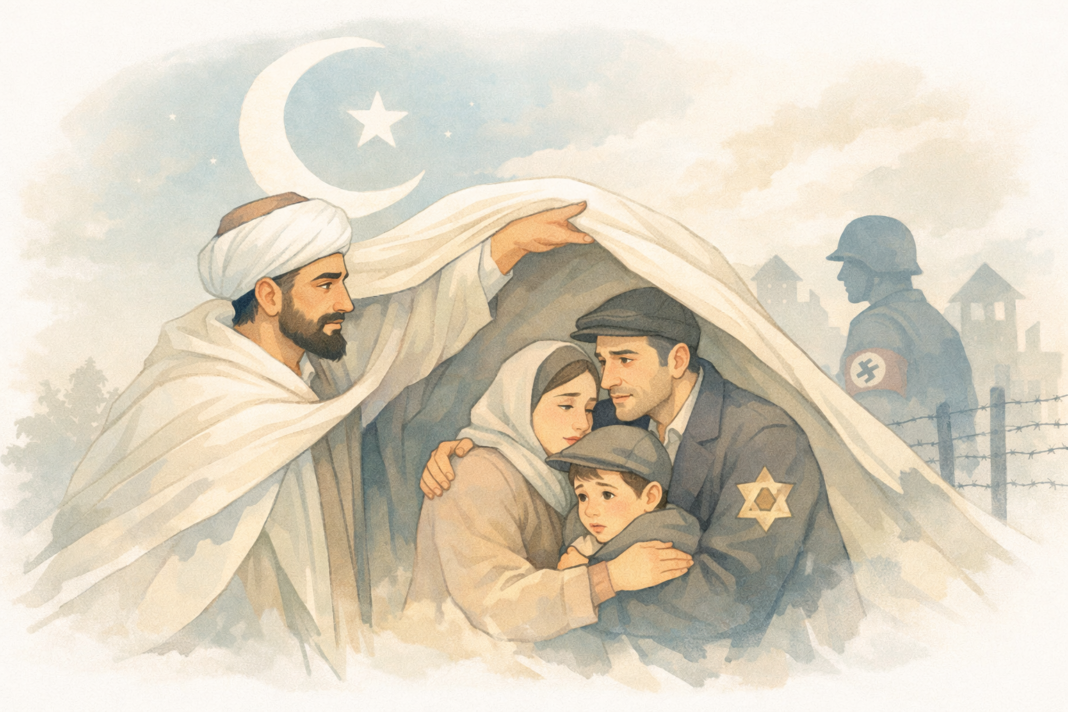
And most incredible of all, in Paris itself, the Grand Mosque of Paris became a rescue centre for Jews. The mosque Imam Si Kaddour Benghabrit called his people and said, “Find Jews and bring them here.”
Jewish families would use the basement of the mosque as a hideout. In cases where space became an issue, the Imam made Islamic identity papers, and he trained Jews to dress like Muslims and recite simple Islamic prayers to pass as Arabs in a place full of Nazis who would take them to Auschwitz in case they were caught. Through this, it is estimated that at least a thousand Jews were saved by the Muslim community of Paris.
A thousand Jews were saved in the heart of Nazi-occupied Paris. All of them were saved by Muslims. The documents were forged in a mosque. The Imam taught them prayers. An entire community could have looked away, could have said “not our problem,” could have chosen safety over solidarity. Muslims did not, and chose to protect Jews.
Tragedy of forgetting
And that is what is so torturous about the present, so historically unprecedented, so morally twisted. By 1947, there were almost 1 million Jews who were residing in the Muslim territories, more Jews in the Arab world than in Europe, following the Holocaust. Millennials-old communities, communities that had been displaced when the Christendom cast them away, communities that had prospered through the Islamic guard, were going to be dislocated.
With the formation of Israel, it all changed. It is important to know: the antipathy that had grown between the Arab Muslims and Jews was not old and theological but contemporary and political. It was brought by the Nakba, the genocide of 1948, by the exodus of hundreds of thousands of Palestinians, by massacres such as Deir Yassin, by the settlement of a Jewish state on Arab territory, by the sword, and with the help of the West.
The ensuing fury was not anti-Semitism in the European understanding, but a political opposition to Zionism as a colonial enterprise at the expense of an indigenous people. But this difference, real as it was, did not save the ancient Jewish communities of the Arab world.
In the ten years after 1948, about 850,000 Jews fled or were expelled from Arab states, nearly the same number as the Palestinian refugees created by Israel. They went to Israel, where they were promised a new life, a home, and equality among their own people. Instead, they discovered apartheid, even among the Jews themselves, European Jews against Arab Jews.
The Ashkenazim, Jews of European origin, white and culturally Western, had established the state and monopolised power. The Mizrahim and Sephardim, Jews of Arab and Muslim origin, dark-skinned, Arabic-speaking, culturally Eastern, were treated as second-class citizens. They were relegated to development towns on the outskirts, received substandard housing, lacked equal amenities, were denied government jobs, and were treated as “primitive” and “uncivilised”.
In the 1950s and 1960s, Mizrahi immigrants in Israel lived in tent camps while Ashkenazi immigrants received permanent homes. They attended separate schools with poor curricula, were barred from Kibbutzim, elite military units, and the upper echelons of government and business. The racist discourse they faced labelled their culture as “primitive” and their traditions “backwards”. Even the term Mizrahi became an epithet among European Jews who saw themselves as civilising the ‘Orientals.’
The Israeli social order reproduced the same hierarchies Jews had suffered in Europe, but now with Jews as both persecutors and persecuted. The Ashkenazim, escaping European anti-Semitism, brought European prejudice with them and subjected their darker-skinned, Muslim-origin co-religionists to it.
This internal Israeli racism persists to this day. One of Israel’s largest political parties, Shas, was established solely to defend the rights of Mizrahi and Sephardic Jews against Ashkenazi dominance. Its existence is itself a testament to intra-Jewish discrimination. A Jew from Yemen, Morocco, or Iraq, however religious or Zionist, will not be treated as an equal by the European Jewish establishment that rules Israel. They know by your name, colour, and accent. Remember, Venice’s ghetto has been transplanted to Tel Aviv.
The question
This is where we find ourselves today, with the Middle East in ruins and the number of dead rising, with charges of genocide being hurled about and the world taking sides, with the centuries-old history between Muslims and Jews being perverted into an unrecognisable form. And here, the question history asks us is this: What happened?
What became of the civilisation that guarded the Jews when they were burned in Europe? And what became of the Sultans that received the exiles of 1492? Where were the Imams who accommodated Jews in Parisian basement mosques? What became of the Caliphs who filled the House of Wisdom with Jewish wise men, who put one of the rabbis in command of Muslim forces, who handed up their health to Jewish physicians as they recaptured Jerusalem?
The response, which is bitter but inevitable, is that the heirs of their saved Jews, the Ashkenazim of Europe who established Israel and own its instruments of power, have forgotten this history completely. Or perhaps they never knew it. It may never have been taught in their schools, never proclaimed in their holidays, never transmitted by their families. Maybe it was the Jewish experience of the traumas of the Holocaust, and the memory of the Christian persecution that dominated the Jewish consciousness so thoroughly, that even the experience of Jews under Islam, which was quite different, was swept away.
The cause, however, is the tragedy we see every day. It is the same European Jews whose forefathers were rescued by Muslims who kill Muslims, with American guns. It is the same civilisation that helped to shelter half a million Spanish Jews, that is now also helping to level the Middle East with its military equipment. Those who previously had to flee to the Ottoman Empire are now doing the same with their children and putting a siege that starves them on the land their ancestors used to hide.
The reason why Muslims safeguarded Jews was not that they had a reason to receive one in return, but because Islam is mandated to do so, and therefore the Prophet Muhammad (PBUH) established it, and their religion demanded it. Given an opportunity, they would repeat it tomorrow since Islam instructs us to protect the vulnerable.
The point is that the existing conflict and its horror and all its complexity cannot be explained with the help of the ancient Muslim-Jewish hatred, since there was no such ancient hatred. This was made in Europe, brought to the Middle East, and imposed on a region that had, over fourteen hundred years, modelled something quite different.
The synagogues of Granada remain, constructed during the Muslim rule, which is a testimony to the era when Jews were prosperous in the very centre of the Islamic civilisation. The works of Maimonides, written in Arabic and influenced by Islamic philosophy, remain the basis of Jewish theology. The current generation of people rescued by Sultan Mehmed II and Imam Benghabrit is the one flying the drones that slaughter Palestinians. And the ignorant world sees the devastation and takes it for granted as part of history.
This was not the case for much of the previous 1400 years. And until the fact is realised, until the lost memory of Muslim-Jewish coexistence is rediscovered and learned and commemorated, the tragedy will persist, because tragedies beget by historical amnesia are the most difficult to end.