


New Delhi: Wajid Ali Shah, the last monarch of Awadh, has had a peculiar destiny in the history of the sub-continent. He is remembered as the dissipated and ineffective king, who relinquished his throne to the British in 1856, a king so completely engrossed in pleasure that he was incapable of performing the responsible functions of government.
It is a caricature, and that a caricature, carefully developed by the colonial rulers, and too easily embraced by the later generations of historians, which has not only served to do justice to a political leader, but to eclipse one of the greatest inventive natures of nineteenth-century India.
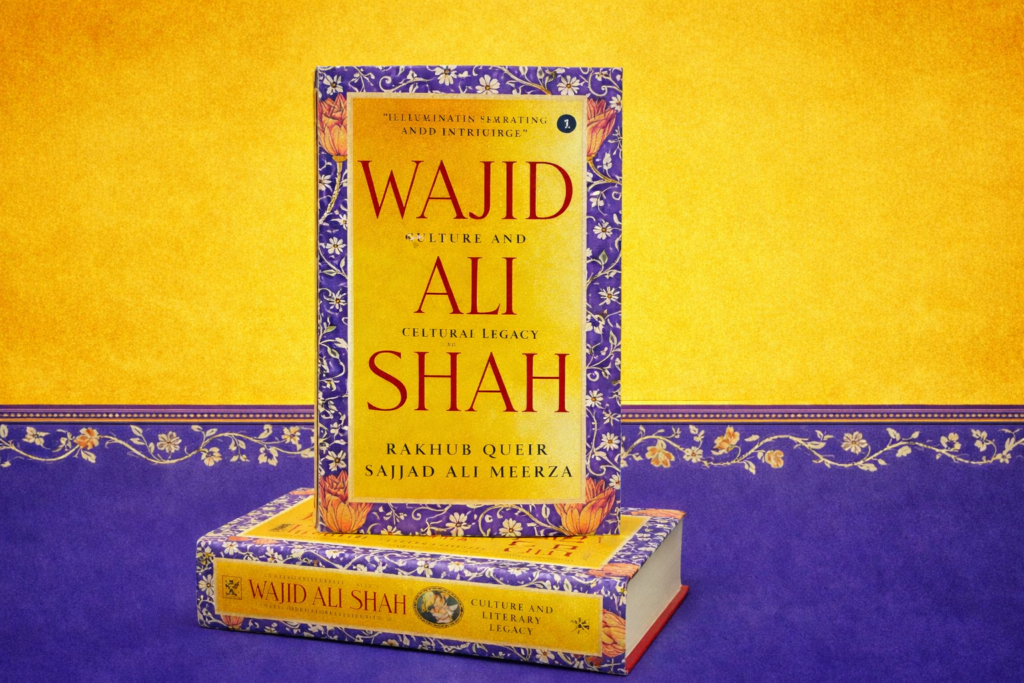
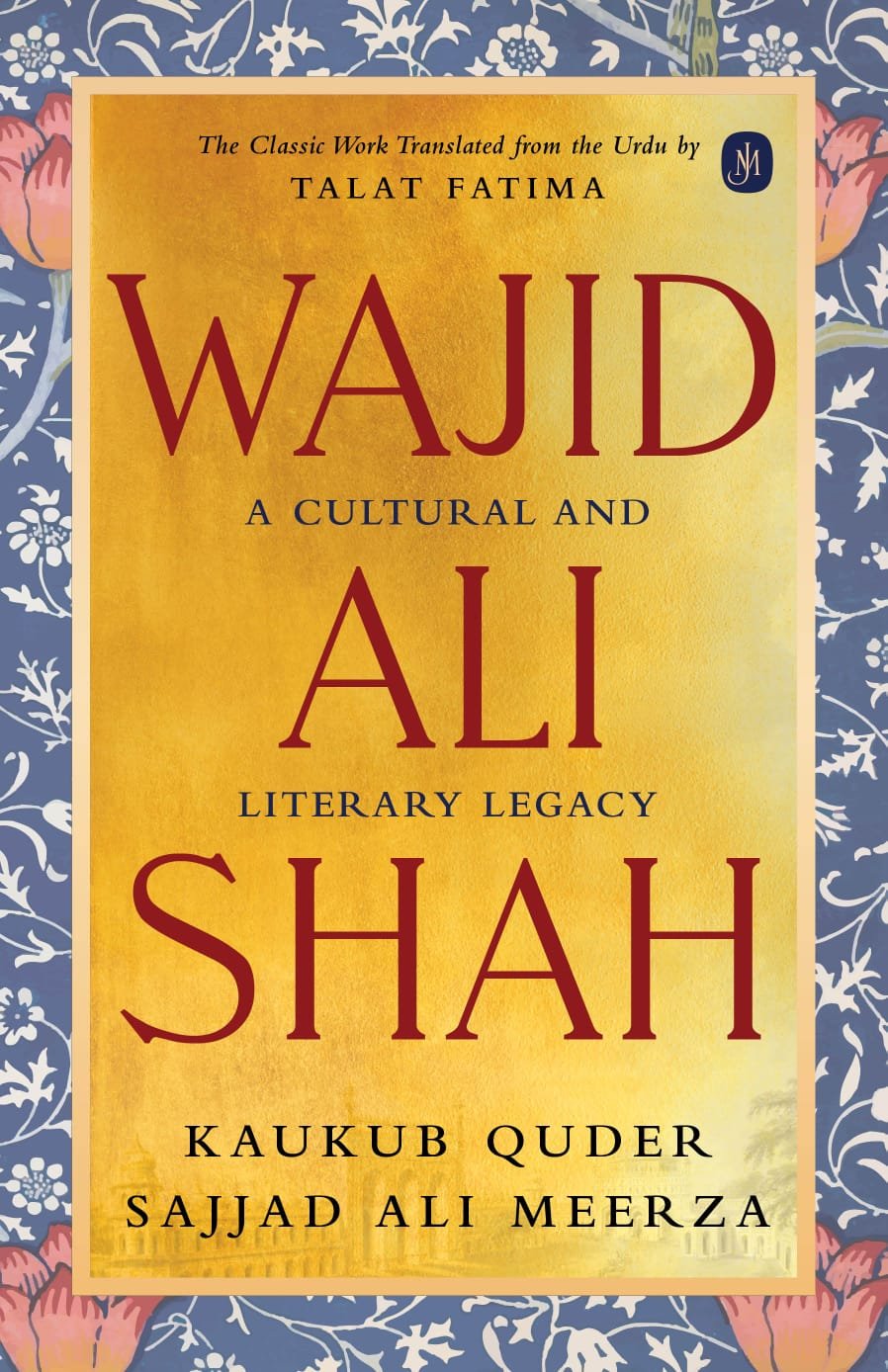
The unsurpassed achievement of a ruler who was both the genius of his time and the victim of a carefully orchestrated historical campaign to diminish his stature is the magisterial volume of Kaukub Quder Sajjad Ali Meerza, who, in his magnum opus, Wajid Ali Shah Ki Adabi aur Sakhawati Khidmat (first published in Urdu in 1995), has not only recaptured every literary and cultural creation of his kingdom but also restored to its rightful place the entire literary and cultural heritage of a ruler.
The stakes of this recovery are set out in the first pages, when Meerza, a scholar at Aligarh Muslim University, informs the reader that his project is not just antiquarian but reparative.
The English, he says, had every interest in creating the impression of a Wajid Ali Shah as inept and debauched; a portrait like this one had the effect of justifying annexation, and of concealing the political and cultural refinement of the court which they had dethroned.
Worse still, this story was picked up and exaggerated by Indian critics who ought to have been aware of it, and the result is that, even nowadays, the very name of the king evokes images of prosperity and licentiousness rather than literary creativity and cultural support.
The work of Meerza, then, is to remove the dust of the glass, to distinguish the man, the myth, and to make Wajid Ali Shah what he really was: a poet of great success, a dramatist whose innovations gave anticipation to things yet unrecognised, a musicologist, who influenced the development of the kathak and thumri, and a patron whose interests extended to architecture, costume design, calligraphy and even natural history.
The study is well-structured, indicating the thoroughness of Meerza’s research. The introductory two chapters provide the historical and biographical background needed to interpret the king’s creative output, following the political, social, and religious trends that defined nineteenth-century Awadh and situating Wajid Ali Shah within this complex landscape.
Meerza takes due note of the fact that it is difficult to outline fundamental facts about the life of the king, when he was born, how many wives and children he had, the order of his writings, since there are gaps and inconsistencies that define the available sources.
But he approaches all these challenges with academic discipline, evaluating the evidence, admitting when the evidence is in doubt, and then constructing the scaffolding on which the king’s contributions to culture should be interpreted.
The third chapter, which forms the core of the research, offers an elaborate review of Wajid Ali Shah’s literary works. According to Meerza, there are forty-two works, including massive masnavis, collections of ghazals, prose narratives, and dictionaries and treatises on various topics.
The sheer amount of this production is, in itself, exceptional, but what Meerza is concerned with is not the amount but rather the quality and innovation. He shows that the employment of the king is marked by a peculiar style, colloquial in his letters, dramatic in his masnavis, experimental in his calligraphy and page arrangement, indescribable of any one influence, or of one master.
The argument that Wajid Ali Shah never possessed an ustad, frequently brought forward as evidence of amateurism, is here re-expressed as evidence of his originality: he had been taught by many, and he never aped them, but created a voice of his own.
Much emphasis is given to two monumental works, which represent the breadth and height of the king. The Ishq Nama, written at the age of twenty-six, is a masnavi of unusual frankness that describes his amours in some of the most graphic language, causing such a scandal among readers and leading to imputations of licentiousness.
Meerza provides a more sensitive interpretation, and comparing the eroticism of this work to the sculptures of Ajanta and Ellora, argues that what seems to be prurient pleasure to the indolent eye might be, in a different cultural context, the glorification of a legitimate element of human experience.
The Sabatul Quloob, on the contrary, was written at the age of sixty-two, when the king was in exile at Calcutta; it falls to a staggering total of 48,150 couplets, more than twice the size of anything of the same kind, and is, as Meerza has shown by the most careful calculations, the longest of the masnavi in Urdu literature.
Where the Ishq Nama is a treatise of temporal love, the Sabatul Quloob deals with divine love, and Meerza maintains that the two are to be read in unity as alike manifestations of one sensibility, the inspirative power of existence, that which was in love, human or divine, its moving spirit.
In chapter four, the analysis focuses on other contributions of the king to culture besides literature. This is where Meerza looks at how Wajid Ali Shah innovated in dance and music, pioneered the dance drama called rahas, and worked in architecture, costume design, and even natural history.
The analysis of the rahas is especially useful because Meerza shows that these were not mere entertainment but sophisticated theatrical performances that predetermined many aspects of modern drama.
The king created costumes, built lavish sets, wrote music and lyrics, and directed actors, which is what we today would label a choreographer, music director, and playwright all in a single person.
This was more evident when, as Meerza believes, he was partly deaf, perhaps increasing his sensitivity to gesture and expression, which further adds another twist to this outstanding accomplishment.
Throughout the research, Meerza is sensitive to the political aspects of cultural production. The fact that Wajid Ali Shah insisted on using Urdu instead of Persian to write many of his compositions, the fact that he rejected English terms to describe his army and the fact that he pioneered a new Hindustani aesthetic that bridged several different linguistic/regional cultures, all these decisions were of political value, they asserted the vitality and independence of Indian culture in the era of colonial rule.
Even his highly ostensible critical taste in dance and music, Meerza hints, must be interpreted in part as object; when the British had conceived legitimate monarchy in terms of administrative capacity and military strength, Wajid Ali Shah had a conception of the reverse, in which the nurture of the arts would not be a lure to government, but its paramount realisation.
Talat Fatima’s translation is also worthy of mention separately. The original Urdu text, with its academic apparatus and quotations, both Persian and Arabic, had its own insurmountable difficulties, and Fatima has overcome them with ability and tact. Her writing is focused and elegant, supporting Meerza’s arguments without making the prose heavy.
The inclusion of a list of terms and a detailed index makes the volume more useful to the researcher, and the translator’s text explaining her personal attachment to the topic and the difficulties of translating this giant into English gives the work a sensitive touch.
As a firstborn daughter of Wajid Ali Shah and Begum Hazrat Mahal, Fatima brings to the project a sense of personal interest that Meerza lacks as an academic.
In any case of limitations in the book, they are the limitations that are inherent in the publication of the work as a doctoral thesis. The organisation is even sometimes redundant, and the insistence with which Meerza strives to prove every calumny and rectify every error may result in passages that are more accurately called legal briefs than literary criticism.
The defence of the king against the accession of debauchery, though scarcely to be excused by the recollections of misrepresentation, sometimes serves to amount to apologetics, and the reader will probably find himself wishing that a more detached opinion might be taken.
But these are little scruples to a masterpiece of such monumental scholarship. This research will likely not be replaced; Meerza will always be the authoritative biography of Wajid Ali Shah’s literary and cultural heritage.
The fact that the book is endorsed by the historian Irfan Habib, the filmmaker Muzaffar Ali, and the writer Rana Safvi all testifies to the relevance of this publication.
Nonetheless, the best recommendation comes with the work itself, which manages to reestablish to us a figure whose contributions have been carefully obliterated.
Wajid Ali Shah, it comes out of these pages not as the effete and decadent ruler of the colonial caricature but as the embodiment of creative force in its primeval form, as the king who recognised that the health of a civilisation was not to be measured by the size of its armies and its treasuries but by the size of its songs and its tales, by the size of its dances and its dramas.
To reclaim this legacy, Meerza and Fatima have done an invaluable service not only to the memory of an extraordinary figure but also to our perception of nineteenth-century India and the tangled web of politics, culture, and resistance that worked to make it what it was.
Daanish Bin Nabi can be reached at daanishoffice@gmail.com