


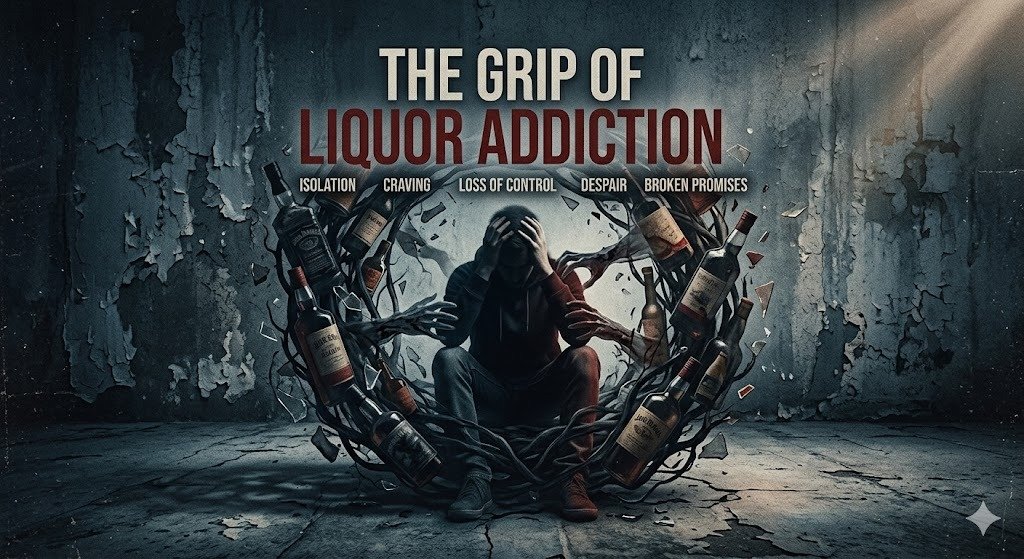
Alcohol addiction is becoming one of the most serious challenges in today’s society. It is not limited to any one age group but is increasingly affecting the youth. What often begins as a casual habit or social activity gradually turns into a dangerous addiction that can destroy an individual’s health, relationships, and future.
Alcohol is extremely harmful to the human body. Once consumed, it can remain in the body for 6 to 72 hours, depending on various factors. It stays in the blood for about 12 hours, in the breath for 12 to 24 hours, in urine for 12 to 24 hours, and in saliva for around 12 hours. Shockingly, traces of alcohol can even be detected in hair for up to 90 days. This clearly shows how deeply alcohol affects the human system.
The most severe damage caused by alcohol is to vital organs such as the brain, liver, and heart. In the brain, alcohol directly affects the frontal lobe, which is responsible for decision-making, focus, and emotional control. This is why people often lose control over their actions and behaviour after drinking. Memory loss is also a common effect, as alcohol blocks the transfer of short-term memory into long-term memory.
Alcohol abuse also leads to liver diseases, heart problems, and overall weakening of the body. In simple terms, alcohol has a stronger and faster effect on those parts of the body where blood flow is higher, making it even more dangerous.
Apart from physical harm, alcohol also affects a person’s behaviour and social life. It increases aggression, leads to poor decision-making, and often results in family conflicts, violence, and accidents. Many people consume alcohol to escape from stress or life problems, but in reality, it only makes those problems worse.
In modern times, alcohol has become a common part of celebrations such as birthdays and parties. Many believe that it increases enjoyment, but this is a misconception. Excessive drinking often leads to loss of control, inappropriate behaviour, and regretful actions.
The impact of alcohol addiction is not limited to individuals—it affects society as a whole. It contributes to crime, poverty, and reduced productivity. The future of the youth is especially at risk, which in turn hinders the nation’s development.
To tackle this issue, awareness is the most important step. Families, schools, and society must work together to educate people about the harmful effects of alcohol. Strong laws and strict implementation by the government are also necessary to control their misuse. Rehabilitation centres and proper guidance can help those who are already struggling with addiction.
In conclusion, alcohol does not solve problems—it only adds to them. A healthy and addiction-free life is essential for a better future. It is our collective responsibility to spread awareness and protect our society from this growing danger.