


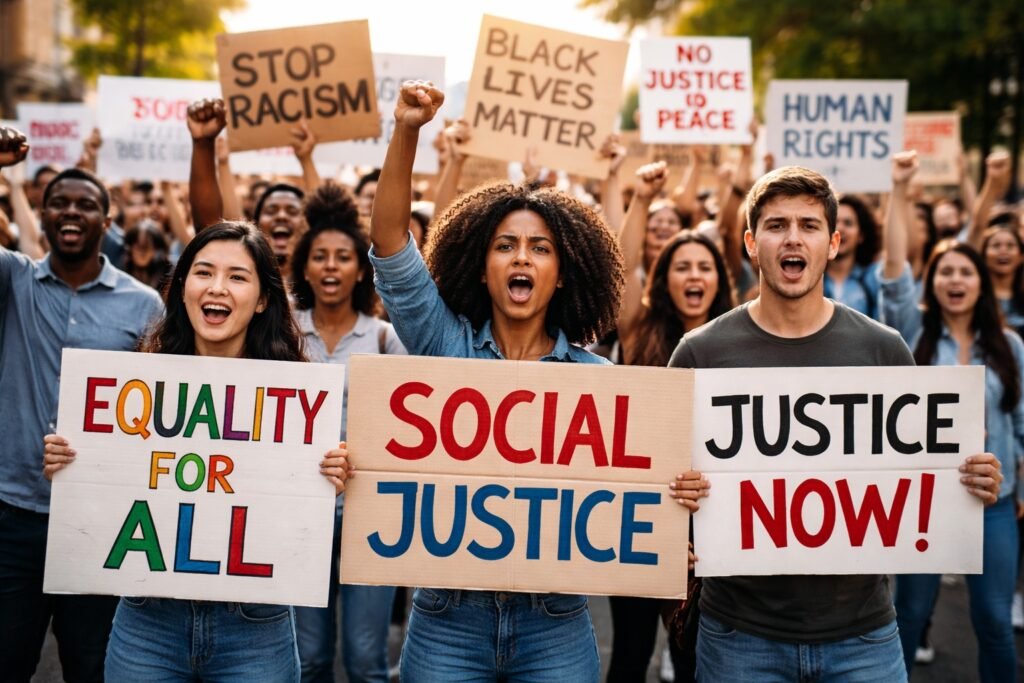
Social justice is not merely an abstract ideal enshrined in constitutional philosophy; it is a lived reality that must be reflected in governance, policy implementation, and the everyday experiences of citizens. In a region like Jammu & Kashmir, where history, geography, and conflict have intersected to create unique developmental challenges, the pursuit of social justice assumes deeper significance.
Over the years, a wide range of welfare schemes initiated by both the central and local governments have sought to address disparities, uplift marginalized communities, and create opportunities for inclusive growth. Evaluating the effectiveness of these schemes requires a careful examination of their reach, impact, and the extent to which they have transformed lives on the ground.
The socio-economic fabric of Jammu & Kashmir is characterized by diversity as well as disparity. While urban centers have witnessed gradual development and improved access to services, many rural and border areas continue to face structural challenges. Regions such as Poonch, Rajouri, Doda, Kishtwar, and parts of Kupwara and Bandipora often grapple with limited infrastructure, difficult terrain, and restricted access to essential services. In such a context, welfare schemes are not just policy tools but lifelines that bridge the gap between aspiration and opportunity.
One of the most significant areas of intervention has been in the domain of financial inclusion and poverty alleviation. Schemes aimed at providing direct financial assistance, employment opportunities, and access to banking services have played a pivotal role in empowering economically weaker sections. The expansion of banking networks, the promotion of self-help groups, and the integration of beneficiaries into formal financial systems have collectively contributed to reducing economic vulnerability. For many households, particularly in rural areas, the shift from informal to formal financial mechanisms has enhanced security, transparency, and access to credit.
Employment generation has been another critical focus area. Programs designed to provide wage employment, particularly in rural settings, have not only created income opportunities but also contributed to the development of local infrastructure. Roads, irrigation channels, and community assets built under such schemes have long-term benefits that extend beyond immediate employment. In Jammu & Kashmir, where seasonal unemployment and limited industrialization pose challenges, such initiatives have provided a crucial safety net for vulnerable populations.
The agricultural sector, which remains the backbone of the region’s economy, has also been the focus of various welfare interventions. Farmers have benefited from subsidies, crop insurance schemes, and initiatives aimed at improving productivity and market access. Horticulture, in particular, has emerged as a key area of growth, with support for apple cultivation, saffron production, and other high-value crops. These efforts have not only enhanced incomes but have also contributed to the diversification of the rural economy.
Education and healthcare are fundamental pillars of social justice, and significant strides have been made in expanding access to these services. The establishment of new schools, colleges, and skill development centers has opened up opportunities for youth, enabling them to pursue education and employment beyond traditional sectors. Scholarship schemes and financial assistance programs have further ensured that economic constraints do not become barriers to education. In a region where conflict has often disrupted schooling, such interventions have been instrumental in restoring continuity and hope.
Healthcare initiatives have similarly focused on improving accessibility and affordability. The expansion of healthcare infrastructure, coupled with insurance schemes that provide financial protection against medical expenses, has brought relief to many families. Mobile medical units and outreach programs have extended services to remote areas, addressing the challenges posed by geography and connectivity. The emphasis on preventive care and awareness campaigns has also contributed to better health outcomes over time.
Women’s empowerment has emerged as a central theme in the pursuit of social justice in Jammu & Kashmir. Welfare schemes targeting women have sought to enhance their economic independence, social status, and participation in decision-making processes. Self-help groups, skill development programs, and entrepreneurship initiatives have enabled women to become active contributors to the economy. Additionally, measures aimed at improving maternal health, education, and safety have reinforced their role as key agents of change within their communities.
Particular attention has also been given to the welfare of marginalized communities, including Scheduled Tribes such as Gujjars and Bakarwals, who often lead nomadic or semi-nomadic lifestyles. Tailored interventions have been designed to address their unique needs, including mobile schools, healthcare services, and livelihood support. These efforts reflect an understanding that social justice must be inclusive and responsive to the specific circumstances of different groups.
Infrastructure development has been a critical enabler of welfare outcomes. Roads, electricity, water supply, and digital connectivity form the backbone of any development initiative, and their expansion in Jammu & Kashmir has significantly improved the quality of life. Border areas, which were once isolated, are now witnessing enhanced connectivity, enabling better access to markets, education, and healthcare. This transformation has not only facilitated economic growth but has also strengthened the integration of these regions into the broader national framework.
However, the evaluation of welfare schemes must also take into account the challenges and gaps that persist. While the reach of schemes has expanded, issues related to implementation, awareness, and monitoring continue to affect outcomes. In some cases, beneficiaries may not be fully aware of the schemes available to them or may face difficulties in accessing them due to bureaucratic hurdles. Ensuring transparency, accountability, and efficiency in the delivery of services remains an ongoing task.
Another important dimension is the need for community participation and feedback. Welfare schemes are most effective when they are aligned with the actual needs and priorities of the people. Engaging local communities in the planning and implementation process can enhance relevance and ownership, leading to better outcomes. Panchayati Raj institutions and local governance bodies have a crucial role to play in this regard, serving as intermediaries between the government and the people.
The integration of technology into welfare delivery has opened new avenues for improving efficiency and transparency. Direct benefit transfers, digital identification systems, and online monitoring platforms have reduced leakages and ensured that assistance reaches the intended beneficiaries. In Jammu & Kashmir, where logistical challenges can complicate traditional modes of delivery, such innovations have proven particularly valuable. However, bridging the digital divide and ensuring that all sections of society can access these technologies is equally important.
The impact of welfare schemes in Jammu & Kashmir must also be viewed in the broader context of peace and stability. Development and security are deeply interconnected, and the success of one reinforces the other. By addressing socio-economic disparities and creating opportunities, welfare initiatives contribute to reducing alienation and fostering a sense of inclusion. For the youth, in particular, access to education, employment, and entrepreneurship can serve as powerful alternatives to negative influences.
At the same time, it is important to recognize that social justice is an ongoing process rather than a one-time achievement. The needs of society evolve, and policies must adapt accordingly. Continuous evaluation, innovation, and responsiveness are essential to ensure that welfare schemes remain relevant and effective. This requires not only institutional commitment but also a collaborative approach that involves government agencies, civil society, and the community at large.
Jammu & Kashmir today stands at a critical juncture, with new opportunities for growth and development emerging alongside persistent challenges. The progress made in implementing welfare schemes is encouraging, but much remains to be done to achieve the vision of inclusive and equitable development. Strengthening institutional mechanisms, enhancing awareness, and fostering a culture of accountability will be key to realizing the full potential of these initiatives.
Ultimately, social justice in Jammu & Kashmir is about more than statistics and policy frameworks; it is about transforming lives and building a society where every individual has the opportunity to thrive. The success of welfare schemes must be measured not only in terms of coverage and expenditure but also in the dignity, empowerment, and hope they bring to the people. As the region continues its journey towards stability and prosperity, the commitment to social justice will remain a guiding principle, shaping a future that is both inclusive and resilient.