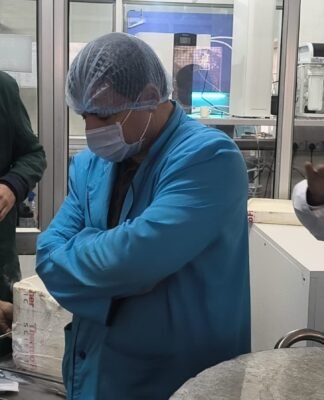


The recent directive barring Medical Representatives from Central Government hospitals, as reiterated through office orders issued by the Directorate General of Health Services and highlighted in Parliament by Anupriya Patel in the Rajya Sabha, marks a timely and necessary intervention in India’s public healthcare system. At its core, the decision seeks to restore ethical boundaries between pharmaceutical marketing and clinical decision-making, an area that has long remained vulnerable to undue influence. By restricting the physical presence of medical representatives within government hospitals, the policy attempts to insulate doctors from aggressive promotional tactics that may, consciously or otherwise, shape prescription behavior in ways not always aligned with patient welfare.
The government’s reasoning is pragmatic. In an era where digital communication, Continuing Medical Education (CME) programs, and professional conferences offer ample avenues for sharing scientific updates, there is little justification for routine in-person visits that often blur the line between information dissemination and marketing pressure. The shift towards structured, transparent channels of engagement is not only modern but also essential for maintaining the credibility of medical practice.
However, the true significance of this move lies in its potential ripple effect across states. While central institutions may implement the directive with relative discipline, the situation in many state-run hospitals tells a different story. In regions like Jammu and Kashmir, for instance, it is not uncommon to see medical representatives enjoying easy access to doctors’ chambers, even as patients and their attendants struggle to secure timely consultations. This imbalance not only undermines the dignity of patients but also raises serious questions about priorities within public healthcare spaces.
If the intent behind the policy is to curb unethical practices, then its success will depend largely on uniform adoption and strict enforcement at the state level. State governments must not treat this as a mere advisory but as a guiding principle for reform. Clear protocols, monitoring mechanisms, and accountability frameworks need to be established to ensure that hospital environments remain patient-centric rather than commercially influenced.
At a broader level, this step reflects an evolving recognition within the Indian healthcare system that ethical governance is as crucial as infrastructure and funding. Trust between doctors and patients is the foundation of effective healthcare, and even the perception of external influence can erode that trust. By drawing a firm line against intrusive marketing practices, the government has taken a step towards reinforcing that trust.
Yet, policy declarations alone are not enough. What is required now is a cultural shift within institutions, where patient access is prioritised, professional integrity is safeguarded, and commercial interests are kept at an appropriate distance. Only then can this well-intentioned move translate into meaningful change on the ground.