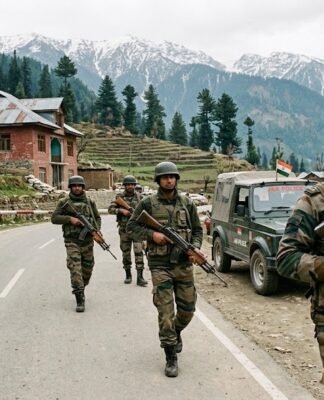
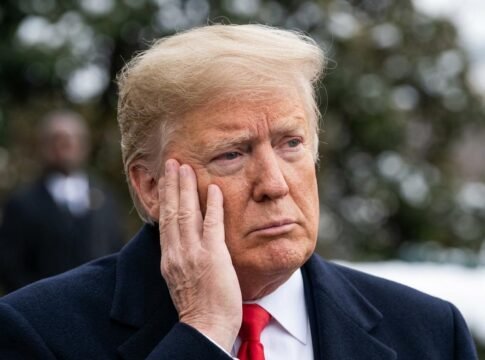

The announcement of a two-week ceasefire between the United States and Iran has brought a sudden, uneasy quiet to the fighting that has raged across the Middle East since late February 2026. President Trump described it as a “total and complete victory” for the U.S., but the reality feels more like a hard-won tactical breather — forced by battlefield exhaustion, economic pain, and quiet diplomatic pressure — than any outright victory for one side.
The truce, announced late on April 7, centers on Iran allowing safe, coordinated passage for commercial shipping through the Strait of Hormuz — the critical chokepoint that handles roughly one-fifth of global oil supplies. In exchange, the United States has suspended its bombing campaign against Iranian targets. Negotiations on a longer-term deal are set to begin this Friday in Islamabad, Pakistan, with both sides indicating that Iran’s 10-point proposal offers at least a workable basis for discussion.
How the Conflict Escalated
Tensions that had simmered for years through proxies, sanctions, and covert operations finally exploded in late February when U.S. and Israeli strikes hit Iranian military and nuclear-linked sites. What was intended as a limited operation to degrade Iran’s capabilities instead triggered a wider regional war. Iran responded with missile and drone attacks, targeting assets across the region and tightening its control over the Strait of Hormuz. The fighting spilled heavily into Lebanon, intensifying Israeli operations against Hezbollah.
Casualty figures remain estimates and vary by source, but the toll has been heavy. Iran reports around 2,000 deaths, including both military personnel and civilians, while independent assessments suggest the number could be higher. In Lebanon, roughly 1,500 people have been killed, many of them civilians. Energy infrastructure and urban areas have suffered significant damage. The disruptions sent oil prices surging, with Brent crude briefly climbing well above $100 per barrel as fears grew that the strait could remain closed for an extended period.
Talks repeatedly teetered on the edge of collapse. Trump issued strong warnings, threatening devastating consequences if Iran failed to reopen the waterway. Iran pushed back, insisting that any agreement must include real security guarantees and sanctions relief rather than just a temporary pause. A UN Security Council resolution backed by Gulf states, aimed at pressuring Iran over the strait, was vetoed by China and Russia—underscoring how major powers were unwilling to support unilateral escalation.
The conflict broadened: missile alerts sounded in Israel and parts of the Gulf, shipping faced heightened risks, and markets reacted sharply to every twist.
The Path to the Ceasefire
The pause emerged through urgent, multi-channel diplomacy. President Trump has publicly credited China with playing a key role in bringing Iran to the table. He suggested Beijing encouraged Tehran to show flexibility and helped create the space needed for the deal. Chinese officials have emphasized their interest in stability to protect energy imports and prevent wider shocks to the global economy — consistent with their broader calls for de-escalation.
Oman and other regional actors provided quieter support, while talks are now moving forward in Pakistan. During the two-week window, Iran has agreed that safe passage through the Strait of Hormuz will be managed in coordination with its armed forces, taking practical security needs into account. Trump described the arrangement as “double-sided” and directly linked to reopening the waterway.
Financial markets welcomed the news. Oil prices dropped sharply — falling around 10-15% in early trading — as fears of prolonged disruption eased. Asian stock markets and energy-related shares posted gains. Analysts caution, however, that this relief is short-term; the underlying vulnerabilities in global supply chains and persistent geopolitical tensions are unlikely to disappear quickly.
The Human and Strategic Cost
Six weeks of fighting have left lasting damage. Civilian casualties and injuries in cities, destroyed or damaged energy facilities, displaced populations, and deeper regional divisions have all taken a heavy toll. The episode has once again shown how vulnerable the world economy remains to disruptions at key chokepoints like the Strait of Hormuz.
Both sides are framing the outcome to suit their narratives. The Trump administration points to U.S. military pressure and leverage as the driving force. Iranian officials highlight their resilience and the inclusion of key demands — such as recognition of enrichment rights in principle, sanctions relief, security guarantees, and talks on wartime damage — in the negotiating framework. Israel has signaled that the truce does not necessarily cover its separate operations against Hezbollah in Lebanon.
Fundamental issues remain unresolved: the future of Iran’s nuclear program, the structure of sanctions, regional proxy networks, long-term maritime security arrangements, and mechanisms to enforce any eventual agreement.
The coming two weeks of talks will be critical. They could lay the groundwork for something more stable — or see the fragile ceasefire unravel if violations occur or positions harden. For now, the guns have quieted, but the deep-seated conflicts that ignited this round are far from settled. The situation remains tense, and things could shift rapidly in the days ahead.