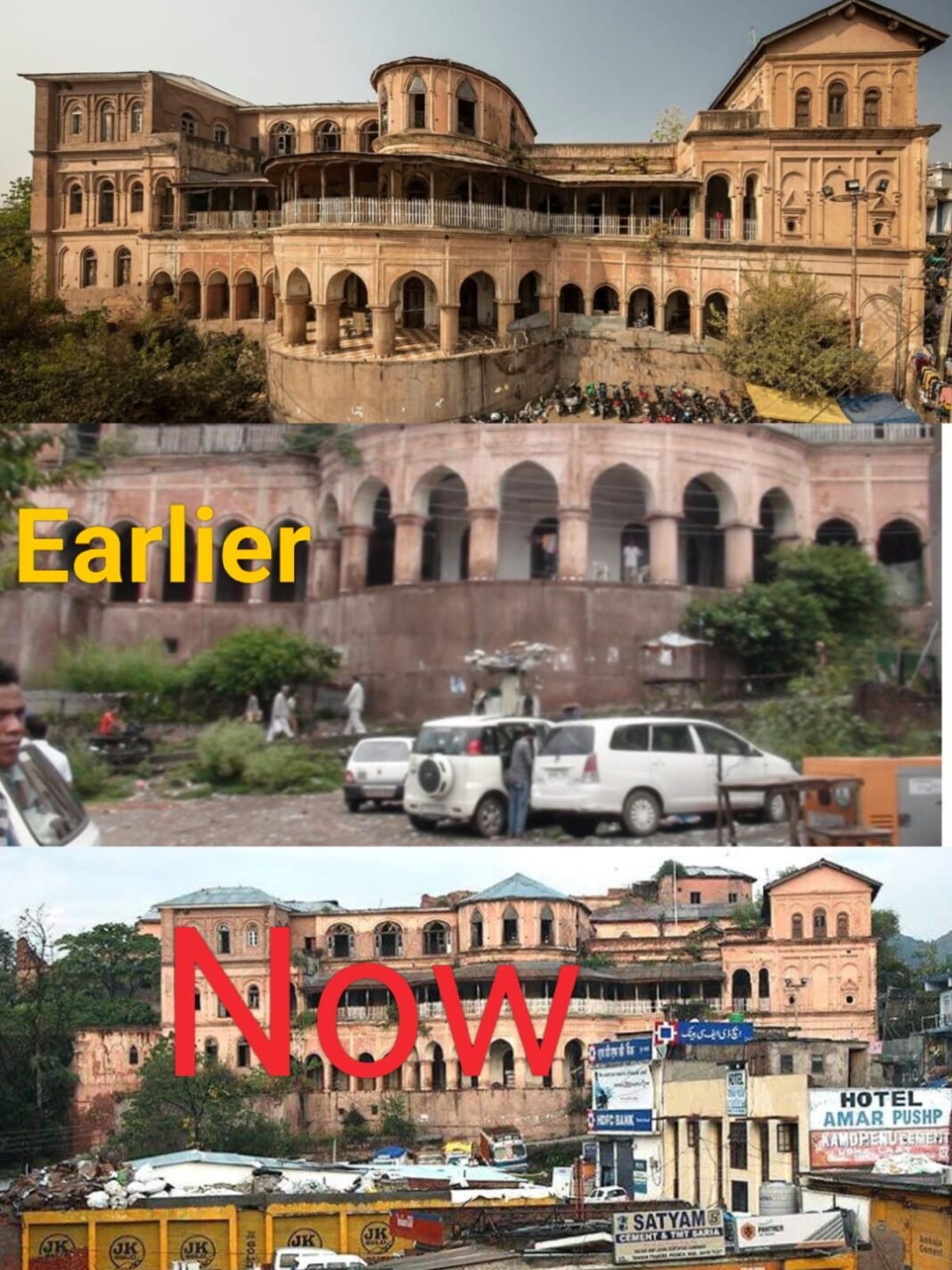

The historic Poonch Fort is not merely an architectural marvel; it is the living legacy of the once-powerful Poonch—a semi-autonomous political entity that shaped the identity, governance, and cultural continuity of the Pir Panjal region. For centuries, this fort stood as a symbol of authority and regional pride.
Today, it stands as a symbol of neglect.
This transformation is not accidental; it is the result of prolonged administrative apathy and a deeply entrenched step-motherly attitude towards border heritage. While grand monuments elsewhere receive global attention, structured conservation, and sustained investment, Poonch Fort has been left to decay in silence.
Built in the early 18th century by Raja Abdul Razak Khan and completed by Raja Rustam Khan, the fort evolved through successive regimes. Additions during the rule of Maharaja Ranjit Singh strengthened its military character, while expansions under Maharaja Gulab Singh and other Dogra rulers introduced architectural refinement, even incorporating European influences.
Spread across nearly 7,500 square meters (around 15 kanals), the fort became the administrative heart under Raja Baldev Singh, functioning as the secretariat for over two centuries.
This was not just a fort; it was the seat of governance, justice, and authority. Decisions taken within its walls shaped the lives of generations across the frontier belt. It represented sovereignty, identity, and continuity. Yet, what stands today is only a shadow of that legacy.The condition of Poonch Fort has steadily deteriorated, particularly after the October 2005 earthquake.
Instead of a serious restoration effort, what followed was indifference. Successive governments have failed to recognize its importance, reducing a monument of national significance to a neglected structure struggling for survival.
Even more disturbing is the systematic encroachment on land historically belonging to the fort complex. Illegal constructions have engulfed the monument, shrinking its original boundaries and destroying its historic landscape.
What was once an open and commanding royal complex has now been choked by unplanned urbanization. The absence of strict land enforcement and heritage zoning reflects a complete failure of governance.
Perhaps the most shocking example of this neglect is the existence of two petrol pumps—one in front of the fort and another at its rear. This is not merely poor planning; it is a direct insult to heritage. Such developments near a centuries-old monument would be unthinkable in other parts of the country.
Why, then, is Poonch treated differently?
The argument that renovation efforts are underway does little to inspire confidence. Earlier works by the Tourism Department were limited to superficial improvements. The recent façade restoration project by the Public Works Department, Jammu & Kashmir, with an estimated cost of ₹2.99 crore, is a step in the right direction but remains grossly inadequate in scope. Cosmetic repairs cannot substitute for a comprehensive conservation strategy.
The issue here is not just restoration; it is recognition. Poonch Fort has been excluded from the mainstream heritage narrative, much like the region itself. Border districts are remembered in times of conflict but forgotten when it comes to preserving their history and identity.
This must change.
There is an urgent need for decisive intervention. The Union Government, the Lieutenant Governor’s administration, and the UT Government of Jammu & Kashmir must act without delay. The fort should be handed over to the Archaeological Survey of India—an institution equipped with the expertise, resources, and legal mandate to protect monuments of national importance. Encroachments must be identified and removed, and heritage boundaries must be clearly demarcated.
Commercial activities in the immediate vicinity must be strictly regulated. Most importantly, Poonch Fort must be integrated into a broader heritage and tourism framework that acknowledges its historical significance.
Poonch Fort is not just a monument of the past; it is a test of our commitment to preserving history. Its neglect is not just a failure of policy; it is a failure of responsibility. If action is not taken now, we will not just lose a monument—we will lose a part of our collective identity.