


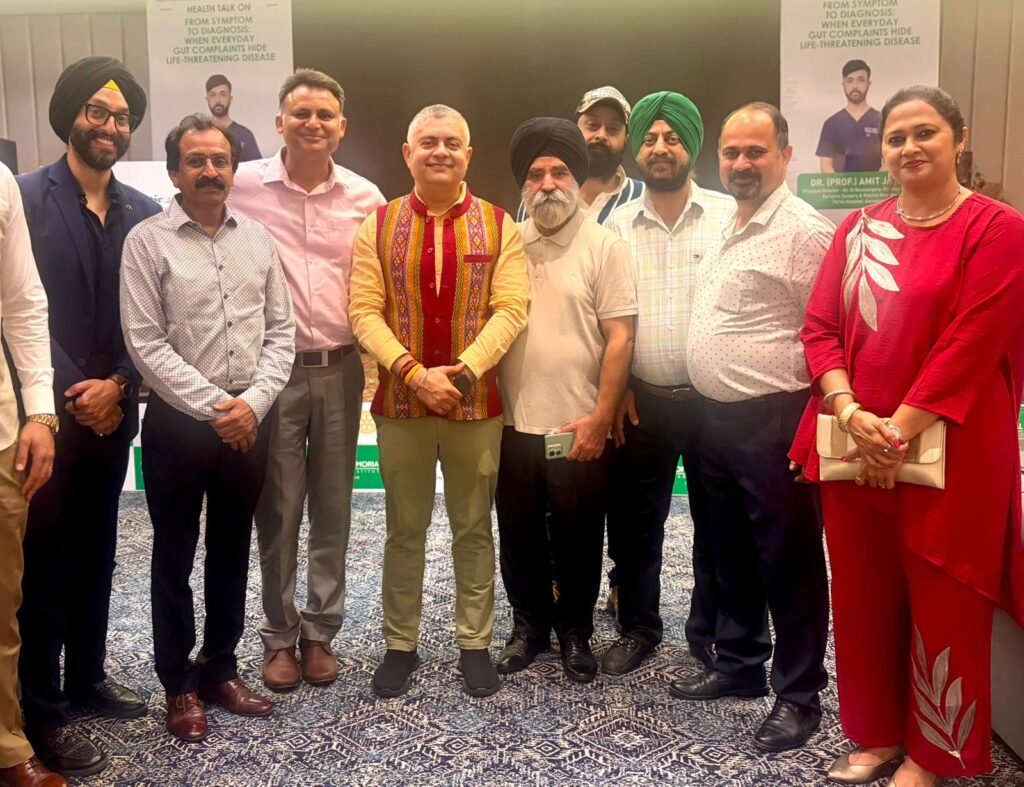
Jammu, J&K (India): Chief Principal Census Officer (CPCO) and Director of Census Operations (DCO), Ministry of Home Affairs, Government of India, Amit Sharma, IAS, highlighted the roadmap and significance of Census 2027.
Sharma has been assigned the responsibility of overseeing census operations in Jammu and Kashmir and Ladakh. He described the Census as a transformative national exercise that will redefine data-driven governance in the country during his keynote address at an event held in Jammu.
Addressing a special gathering as the chief guest at a health talk organised by the Rotary Club Jammu City in association with Fortis Hospital, Gurugram, CPCO Amit Sharma stated that Census 2027 will be India’s first fully digital and paperless census, aimed at generating accurate, real-time, and granular data for effective policy planning and governance.
He informed the gathering that the census will be conducted in two phases in J&K. The first phase—House Listing Operations (HLO) and Housing Census—is scheduled from June 1 to June 30, 2026, preceded by a self-enumeration window from May 17 to May 31, 2026. The second phase—Population Enumeration (PE)—will be undertaken in February 2027, while snow-bound areas will be covered earlier, in September 2026, as per notified timelines.
Elaborating on the digital framework, Sharma said that data collection will be carried out through mobile applications equipped with in-built validation checks to ensure accuracy and consistency. He added that citizens will have the option to participate directly through a dedicated self-enumeration portal, making the census more inclusive, accessible, and transparent.
Highlighting the importance of census data, Sharma stated that it forms the backbone of governance and plays a critical role in the formulation of policies, targeted delivery of welfare schemes, and optimal allocation of resources across sectors such as health, education, infrastructure, and social development. He noted that reliable data is essential for addressing emerging challenges and ensuring inclusive growth.
He further informed that extensive preparatory activities, including freezing of administrative boundaries, development of digital platforms, and training of field functionaries, have been completed to ensure the smooth conduct of census operations.
On data security, Sharma assured that robust safeguards have been put in place, including end-to-end encryption, secure transmission protocols, and certified data centres designated as Critical Information Infrastructure, ensuring complete confidentiality of individual data under the provisions of the Census Act, 1948. He also requested the public not to share sensitive information such as bank account numbers, credit card details, PAN, Aadhaar, or any other information beyond the questions asked in HLO and PE.
Calling for active public participation, Amit Sharma urged citizens, especially Rotarians across all districts of J&K and Ladakh, to spread awareness and cooperate with enumerators during field visits, and to make use of the self-enumeration facility to ensure accurate and complete data collection. He emphasised that Census 2027 will play a crucial role in shaping India’s development trajectory and strengthening evidence-based governance.
Before concluding, the Rotary Club Jammu honoured IAS officer Amit Sharma for taking time out of his busy schedule to share valuable insights with the gathering and promote awareness about the census, terming it the need of the hour.