
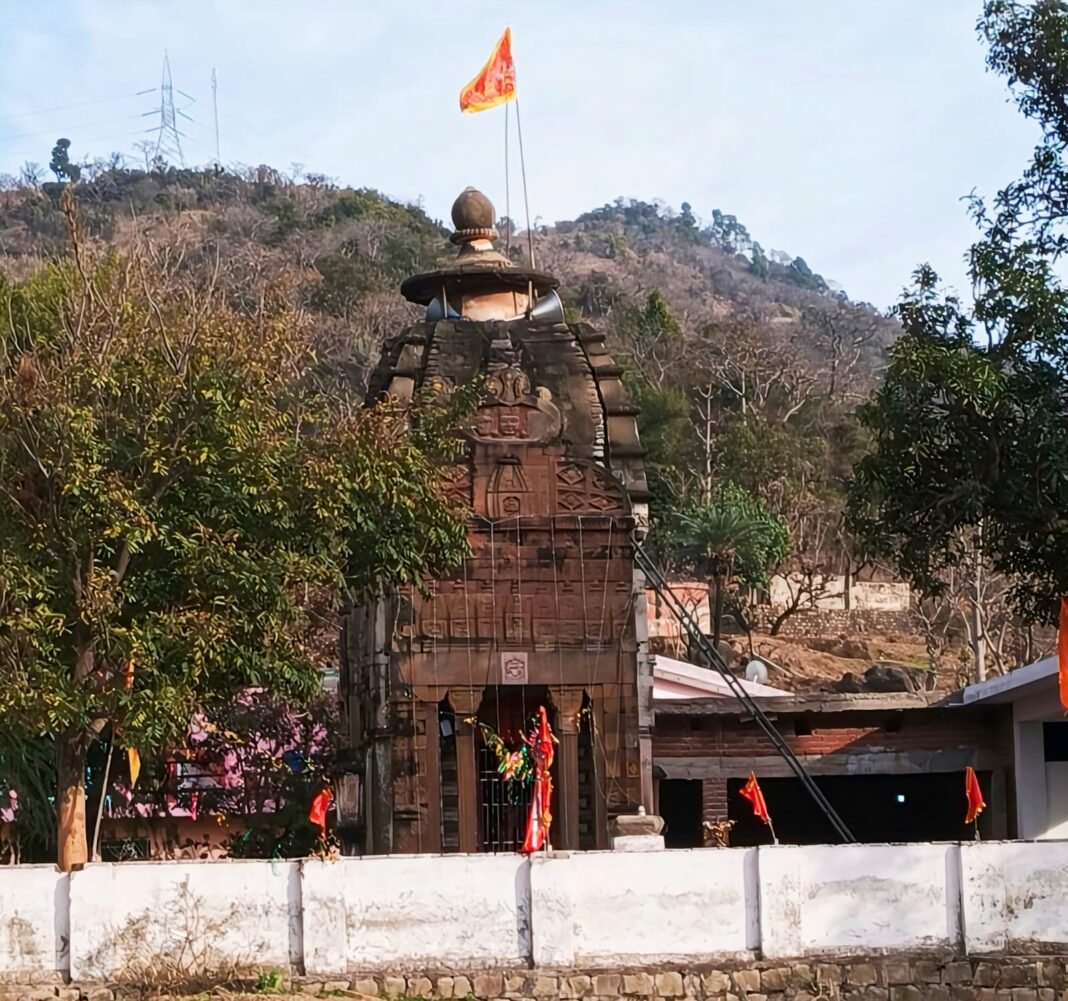

Udhampur, J&K (India): Nestled within the emerald embrace of the Shivalik hills, where the whispers of the Tawi River harmonize with the echoes of antiquity, stands the Jalandra Devi Temple – a breath taking testament to the spiritual and architectural zenith of medieval India.
Located in the Laddan Kotli area of Udhampur, this state-protected monument is far more than a structure of sandstone; it is a living hymn to Mata Jalandra, radiating a cultural vibrancy that rivals the famed sculptures of Khajuraho.
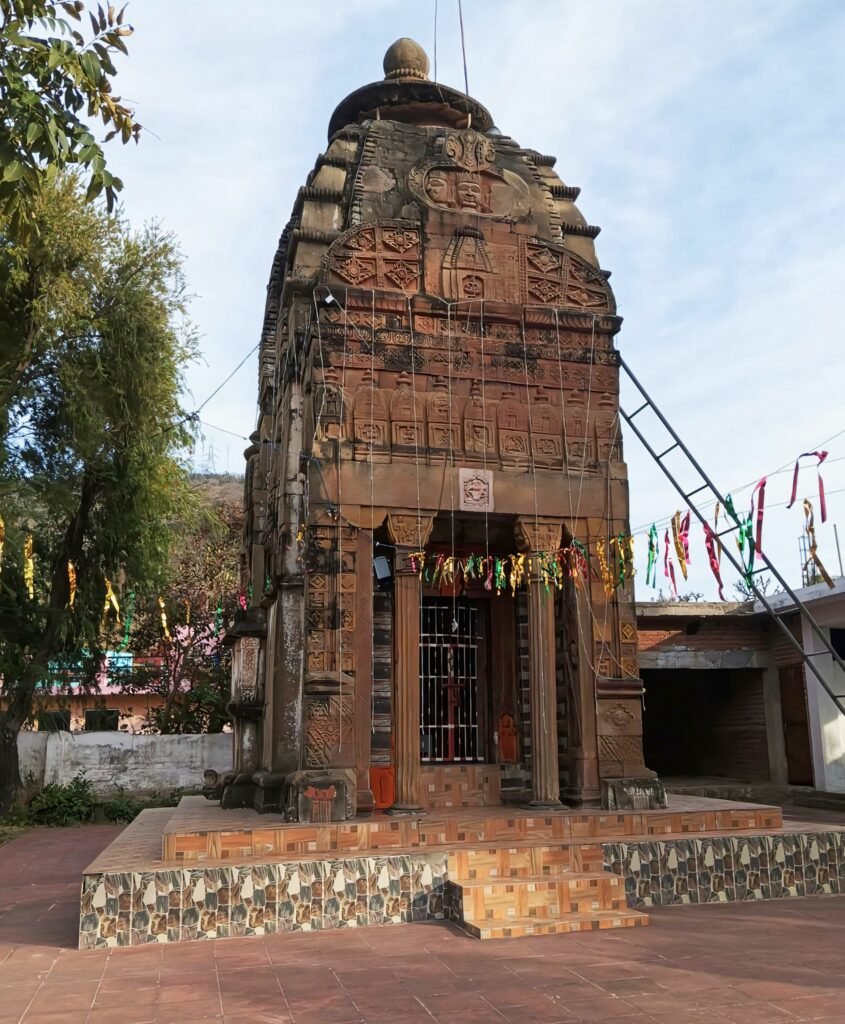
Built approximately in the 10th century AD, likely under the patronage of King Jalandhra of the Trigarta dynasty, the temple serves as a bridge between the mortal realm and the divine, showcasing a fusion of Margi (classical) and Desi (folk) traditions that is rarely mirrored elsewhere in the world.
As one approaches this sacred site, the sheer magnitude of the Nagara-style architecture captivates the soul, with its towering shikhara reaching toward the heavens like a frozen mountain peak, symbolizing the spiritual ascent of the devotee toward the lotus feet of the Mother Goddess.
The true glory of Mata Jalandra’s abode lies in its staggering visual narrative. Every inch of the sandstone exterior is a canvas for the divine, featuring over one hundred and fifty meticulously carved figures. These sculptures do not merely sit upon the walls; they dance, pray, and protect. From the fierce grace of wrestlers in mid-combat to the serene countenances of gods and goddesses, the craftsmanship reflects a level of devotion where the chisel was guided by faith.
The temple’s layout, elevated on a high pedestal without restrictive boundaries, invites the universe to witness its beauty. This “mountain-like spire” is a hallmark of North Indian excellence, yet the Jalandra Devi Temple possesses a unique mystery—many of its exquisite figures were carved on separate stones and assembled with such mathematical and artistic precision that they form a seamless “solved puzzle,” a feat of masonry that leaves modern architects in humble wonder.
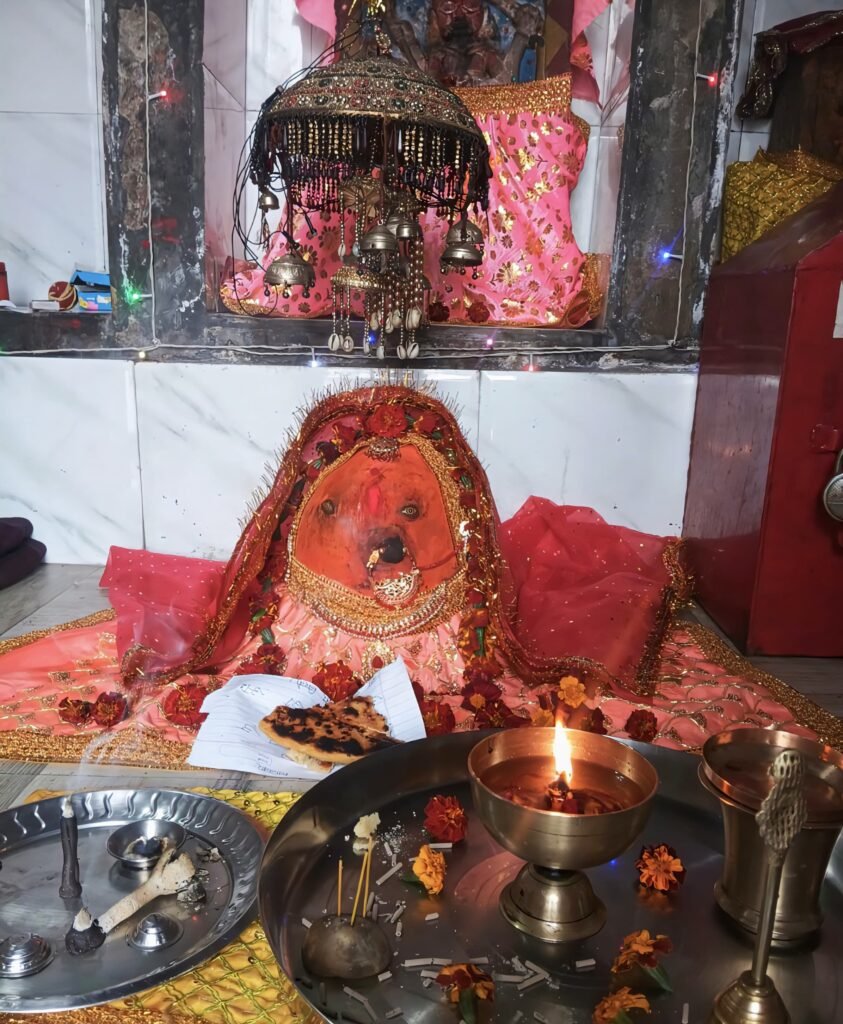
Deep within the heart of the structure, the garbhagriha (sanctum sanctorum) houses the sacred Pindi of Mata Jalandra, slightly raised from the floor as if to meet the seeker halfway.
Beside it rests a magnificent sculpture of the Goddess, rendered in light black stone, depicting her with four arms, regally seated upon a lion that stands triumphantly over an ox. This specific iconography, believed by scholars to be the handiwork of master artisans from Himachal Pradesh, adds a layer of cross-cultural sanctity to the shrine.
The interior also reveals a narrow chamber above the sanctum—a silent sanctuary where ancient sadhus are said to have immersed themselves in deep meditation, away from the eyes of the world. Even the ceiling is a marvel of esoteric symbolism, featuring stone sills engraved with eleven and fourteen snake heads, representing the Eleven Rudras and Fourteen Tattvas, ensuring that every upward glance is a reminder of the cosmic order maintained by the Great Mother.
The external walls of the temple act as a stone library of Vedic and Puranic lore. On the left exterior, the Vanar Sena of the Ramayana comes to life, armed and ready for the divine struggle, while the back wall serves as a gallery for the incarnations of Vishnu, including powerful depictions of the Narasimha Avatar and the humble Vamana Avatar.
The right wall, conversely, features the ten-headed Dashanan (Ravana) and scenes of earthly life, including erotic carvings that symbolize the Khajuraho-inspired philosophy of acknowledging all facets of human existence before entering the purity of the sanctum.
This temple was once the heartbeat of the Chenani kings, who revered Mata Jalandra as their Kuldevi (clan goddess). It is said that the region was a flourishing center for Tantric cults, and the rows of Siddhas and Tantric gurus carved above the lintels stand as eternal witnesses to the esoteric power that once flowed through these hills.
Despite the scars of time and enduring challenges, the aura of Mata Jalandra remains undiminished, casting a protective veil over the Udhampur valley. The temple is not merely a “protected monument”; it is a spiritual lighthouse that beckons restoration and recognition. To walk through its 1.5-meter-wide entrance, flanked by the river goddesses Ganga and Yamuna, is to step back into an era where art was worship and stone was a medium of eternity.
As the sun sets over the Tawi, casting a golden glow upon the twenty-one miniature carved temples that adorn its façade, one cannot help but feel that Mata Jalandra Devi continues to watch over her devotees—waiting for the world to rediscover the path to her magnificent medieval doorstep.