


DD Correspondent
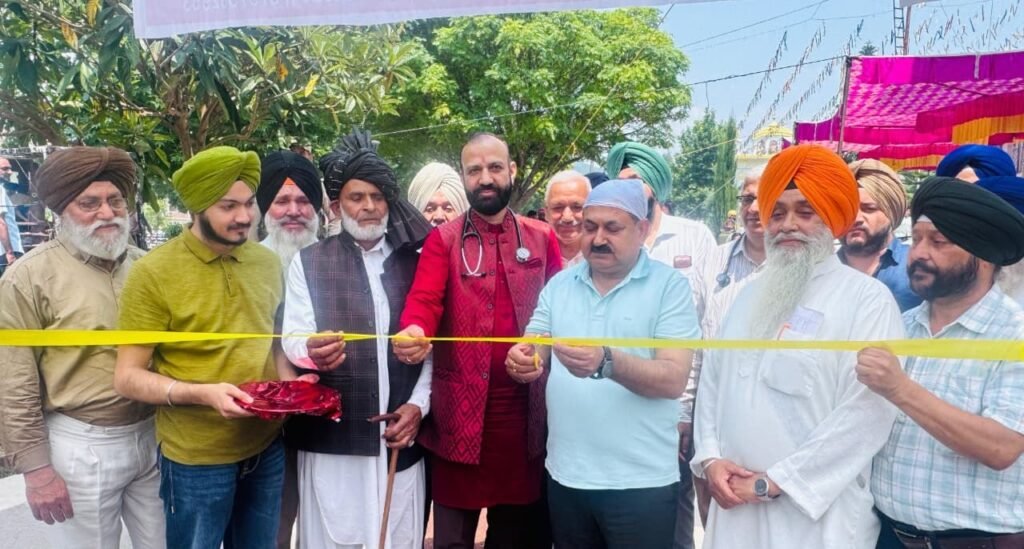
Poonch: Reinforcing the importance of preventive healthcare and equitable access to quality medical services in rural areas, Head of the Department of Cardiology, Government Medical College and Hospital (GMCH), Jammu, Dr. Sushil Sharma, conducted a day-long cardiac awareness-cum-health check-up camp in collaboration with the Management Committee of Gurudwara Sant Bhai Bahadur Singh Ji at Dharamsal Khari in Poonch district.
The camp was inaugurated by Ashok Sharma, Deputy Commissioner, Poonch, along with Dr. Sushil Sharma in the presence of Dr. Parvez Ahmed Khan (CMO Poonch), Dr. Ruby Niaz Bhatti (Deputy CMO), Dr. Shafiq Chauhan (Medical Superintendent, District Hospital Poonch), Gurudwara Committee Chairman S. Harcharan Singh, S. Hardev Singh, Sunil Sharma (President, Bar Association Poonch), Naresh Chander Raj (Former Councillor, Municipal Council Poonch), Mohinder Singh (Former Councillor, Municipal Council Poonch), and several eminent citizens.
The initiative aimed to strengthen the fight against cardiovascular diseases by bringing specialist healthcare directly to rural communities through free medical consultations, ECGs, blood pressure and blood sugar screenings, distribution of essential medicines, and expert counselling. The enthusiastic participation of local residents reflected growing awareness about heart health and the importance of regular medical check-ups.
Addressing the gathering, Dr. Sushil Sharma said that the true strength of a nation lies in the health of its villages, as rural communities form the backbone of India’s social and economic development. He observed that while infectious diseases continue to persist, non-communicable diseases such as hypertension, diabetes, obesity, coronary artery disease, chronic kidney disease, and stroke are rising rapidly even in remote areas due to sedentary lifestyles, unhealthy diets, tobacco use, stress, and lack of awareness.
He emphasized that these illnesses often remain undetected for years before manifesting as heart attacks, heart failure, or strokes, making early screening and timely intervention essential.
Dr. Sharma stressed that preventive healthcare is far more effective and economical than treating advanced disease. He urged people to undergo regular health check-ups, monitor blood pressure and blood sugar levels, maintain a healthy weight, exercise regularly, avoid tobacco, follow a balanced diet, and seek timely medical advice.
He further emphasized that improving rural healthcare requires continuous health education, active community participation, stronger primary healthcare infrastructure, and the use of telemedicine and digital consultations to bridge the gap between specialists and patients in remote areas. He added that schools, Panchayats, religious institutions, and social organizations can play a crucial role in promoting healthy lifestyles and creating health-aware communities.
Speaking to the media, Deputy Commissioner Poonch Ashok Sharma said that the Department of Cardiology, under the guidance of Dr. Sushil Sharma, has been instrumental in providing accessible and equitable cardiovascular healthcare, particularly in the far-flung border areas of Poonch.
On the occasion, Gurudwara Committee Chairman S. Harcharan Singh Khalsa highlighted the close connection between physical health and mental well-being. He stressed the importance of spirituality, meditation, prayer, and positive thinking in reducing stress and improving cardiovascular health.
Other members of the Gurudwara Committee, including S. Hardev Singh, Santokh Singh, Harvinder Singh, Hazara Singh, Mohan Singh, Harbans Singh, Rajinder Singh, Ranjeet Singh, Manmeet Singh, and Inderjeet Singh, appreciated the efforts of Dr. Sushil Sharma and his team for bringing specialized cardiac services to underserved rural communities and promoting preventive healthcare.
Concluding the programme, Dr. Sharma reiterated that quality healthcare should not remain confined within hospital walls but must reach every village, family, and individual, irrespective of geographical barriers.
“Healthy villages create healthy families, healthy communities, and ultimately a stronger nation. By empowering people with knowledge and ensuring that quality healthcare reaches the last mile, we can build a future where every heartbeat reflects hope, resilience, and the promise of a healthier tomorrow,” he said.
Others associated with the initiative included Dr. Anil Mahajan, Dr. D.P. Gupta, Dr. Shahbaz Khan, Dr. Rupambir Singh, Dr. Anitipal Singh, Dr. Jaspreet Singh, Capt. Dr. Sourav Verma, Capt. Dr. Arivanandhapandian, Dr. Kohsheen Kour, and Dr. Sumit. The camp was also supported by paramedical staff and volunteers, including Rajinder Singh, Nirjyote Singh, Shubham Sharma, Paramveer Singh, Gurpreet Singh, Jagmeet Singh, Randhir Singh, Mohd. Farooq, Harsh Bali, Nirvair Singh Bali, Dilbhag Singh, and personnel of the Indian Army.