


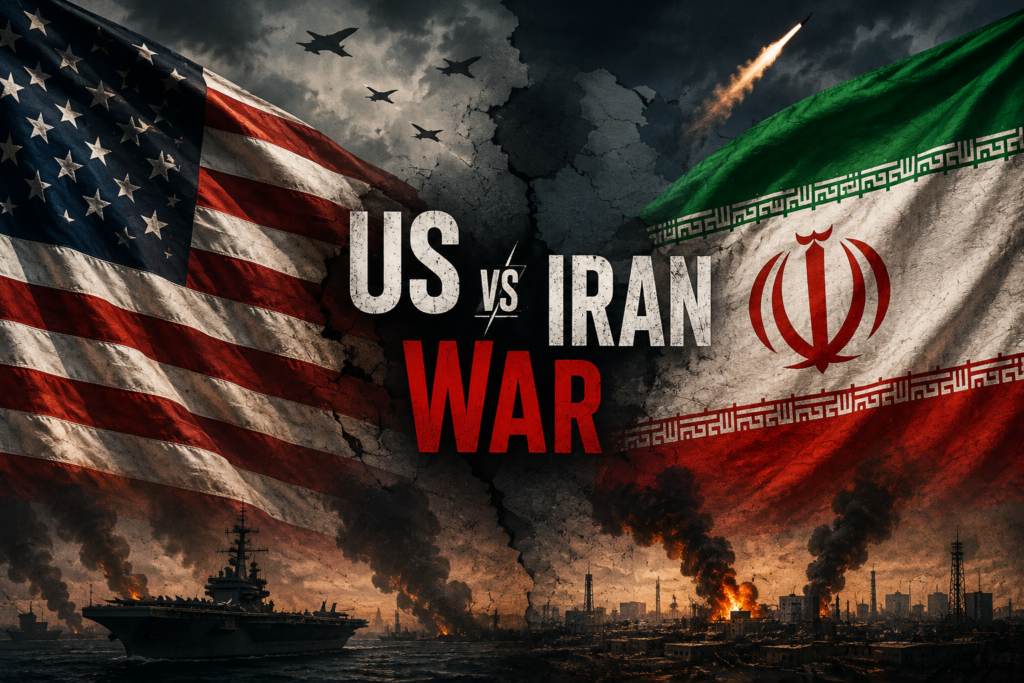
The prospect of a wider Middle East war appeared to recede on Monday after the United States and Iran announced a framework agreement aimed at ending months of conflict that has rattled global energy markets and heightened regional instability. Pakistani Prime Minister Shehbaz Sharif announced that Washington and Tehran had agreed to an immediate halt to military operations, with a formal signing ceremony expected later this week in Switzerland. U.S. President Donald Trump subsequently confirmed the breakthrough and authorized the lifting of the U.S. naval blockade and the reopening of the Strait of Hormuz.
The announcement triggered an immediate positive reaction in global markets, with oil prices falling sharply amid expectations that energy supplies through one of the world’s most critical maritime routes would normalize. The Strait of Hormuz carries roughly one-fifth of global oil shipments, making stability in the region a matter of international economic significance.
Yet despite the optimism, diplomats and analysts caution that the agreement represents a preliminary framework rather than a comprehensive peace settlement. The reported memorandum establishes a ceasefire and creates a 60-day window for negotiations on more contentious issues, including Iran’s nuclear programme, sanctions relief, ballistic missile capabilities and regional security concerns.
The conflict that led to the agreement began in late February following U.S. and Israeli strikes on Iranian targets. What followed was a prolonged cycle of military escalation, maritime disruptions and proxy confrontations that raised fears of a broader regional war. Previous ceasefire efforts failed to produce a lasting settlement, underscoring the difficulty of addressing the deeper strategic disagreements between the parties.
Under the new framework, both sides have reportedly agreed to suspend hostilities while negotiators attempt to resolve long-standing disputes. Discussions are expected to focus on uranium enrichment levels, sanctions relief and verification mechanisms designed to ensure compliance. While both Washington and Tehran have portrayed the arrangement as a diplomatic success, significant differences remain unresolved.
For India, the development carries substantial economic and strategic implications. As one of the world’s largest energy importers, India has closely monitored tensions in the Gulf, where disruptions to shipping routes can rapidly translate into higher fuel costs and inflationary pressures. A sustained reduction in tensions could improve energy security, stabilize freight costs and support broader economic growth.
The agreement may also create a more favourable environment for regional connectivity projects, including India’s interests in Iran’s Chabahar Port and the International North-South Transport Corridor. Reduced geopolitical uncertainty could facilitate trade and infrastructure initiatives that have faced challenges amid sanctions and regional instability.
Nevertheless, significant questions remain about the durability of the arrangement. The framework leaves unresolved some of the most contentious issues that have defined U.S.-Iran relations for decades. Skepticism is particularly strong regarding enforcement mechanisms, the future of Iran’s nuclear programme and the role of regional actors such as Hezbollah and other Iranian-aligned groups. Israel has also expressed concerns about aspects of the agreement, particularly those related to Lebanon and regional security.
Historical experience provides further grounds for caution. The 2015 Joint Comprehensive Plan of Action (JCPOA), once regarded as a landmark diplomatic achievement, ultimately collapsed amid political disputes and changing strategic calculations. Whether the current framework can avoid a similar fate remains uncertain.
The broader geopolitical implications extend beyond the Middle East. China, a major purchaser of Iranian oil, stands to benefit from greater stability in energy markets, while European countries have welcomed the prospect of lower energy costs and reduced security risks. For emerging economies, including India, the agreement highlights the extent to which distant conflicts can influence domestic economic conditions and strategic planning.
Ultimately, the significance of the agreement will depend less on its announcement than on its implementation. The coming weeks of technical negotiations will determine whether the framework evolves into a durable peace process or merely postpones another round of confrontation. For now, the deal offers a measure of relief to a region exhausted by conflict and to a world economy that has felt the consequences of instability in the Gulf.
The agreement is therefore best understood not as a definitive resolution, but as a cautious and pragmatic pause. Its success will depend on sustained diplomacy, effective verification and the willingness of all parties to move beyond immediate tactical gains in pursuit of longer-term stability.